Friday, March 2, 2018

The #1 Reason Paid Ads (On Search, Social, and Display) Fail - Whiteboard Friday

Posted by randfish

Pouring money into a paid ad campaign that's destined to fail isn't a sound growth strategy. Time and again, companies breaking into online ads don't see success due to the same issue: they aren't known to their audiences. There's no trust, no recognition, and so the cost per click remains high and rising.

In this edition of Whiteboard Friday, Rand identifies the cycle many brands get trapped in and outlines a solution to make those paid ad campaigns worth the dollars you put behind them.

Click on the whiteboard image above to open a high-resolution version in a new tab!

Video Transcription

Howdy, Moz fans, and welcome to another edition of Whiteboard Friday. This week we're chatting about the number one reason so many paid ad campaigns, especially from new companies and companies with new products or new ventures that they're going into, new markets and audiences they're addressing, fail. They just fall apart. I see this scenario play out so many times, especially in the startup and entrepreneurial world but, to be honest, across the marketing landscape.

Here's how it usually goes. You've got your CEO or your CMO or your business owner and they're like, "Hey, we have this great new product. Let's spread the word." So they talk to a marketer. It could be a contractor. It could be an agency. It could be someone in-house.

The marketer is like, "Okay, yeah, I'll buy some ads online, help us get the word out there and get us some traffic and conversions."

Then a few months later, you basically get this. "How's that paid ad campaign going?" "Well, not so good. I have bad news."

The cycle

Almost always, this is the result of a cycle that looks like this. You have a new company's campaign. The campaign is to sell something or get exposure for something, to try and drive visits back to a web page or a website, several pages on the site and then get conversions out of it. So you buy Facebook ads, Instagram ads, maybe LinkedIn and Twitter. You probably use the Google Display Network. You're probably using AdWords. All of these sources are trying to drive traffic to your web page and then get a conversion that turns into money.

Now, what happens is that these get a high cost per click. They start out with a high cost per click because it's a new campaign. So none of these platforms have experience with your campaign or your company. So you're naturally going to get a higher-than-normal cost per click until you prove to them that you get high engagement, at which point they bring the cost per click down. But instead of proving to them you get high engagement, you end up getting low engagement, low click-through rate, low conversion rate. People don't make it here. They don't make it there. Why is that?

Why does this happen?

Well, before we address that, let's talk about what happens here. When these are low, when you have a low engagement rate on the platform itself, when no one engages with your Facebook ads, no one engages with your Instagram ads, when no one clicks on your AdWords ad, when no one clicks on your display ads, the cost to show to more people goes up, and, as a result, these campaigns are much harder to make profitable and they're shown to far fewer people.

So your exposure to the audience you want to reach is smaller and the cost to reach each next person and to drive each next action goes up. This, fundamentally, is because...

  • The audience that you're trying to reach hasn't heard of you before. They don't know who you are.
  • They don't know, trust, or like you or your company product, they don't click. They don't click. They don't buy. They don't share. They don't like.

They don't do all the engagement things that would drive this high cost per click down, and, because of that, your campaigns suffer and struggle.

I see so many marketers who think like this, who say yes to new company campaigns that start with an advertising-first approach. I want to be clear, there are some exceptions to the rule. I have seen some brand new companies that fit a certain mold do very well with Instagram advertising for certain types of products that appeal to that audience and don't need a previously existing brand association. I've seen some players in the Google AdWords market do okay with this, some local businesses, some folks in areas where people don't expect to have knowledge and awareness of a brand already in the space where they're trying to discover them.

So it's not the case always that this fails, but very often, often enough that I'm calling this the number one reason I see paid ads fail.

The solution

There's only one solution and it's not pretty. The solution is...

You have to get known to your audience before you pour money into advertising.

Meaning you need to invest in organic channels — content or SEO or press and PR or sponsorships or events, what have you, anything that can get your brand name and the names of your product out there.

Brand advertising, in fact, can work for this. So television brand advertising, folks have noticed that TV brand advertising often drives the cost per click down and drives engagement and click-through rates up, because people have heard of you and they know who you are. Magazine and offline advertising works like this. Sometimes even display advertising can work this way.

The second option is to...

Advertise primarily or exclusively to an audience that already has experience with you.

The way you can do this is through systems like Google's retargeting and remarketing platforms. You can do the same thing with Facebook, through custom audiences of email addresses that you upload, same thing with Instagram, same thing with Twitter. You can target people who specifically only follow the accounts that you already own and control. Through these, you can get better engagement, better click-through rate, better conversion rate and drive down that cost per click and reach a broader audience.

But if you don't do these things first, a lot of times these types of investments fall flat on their face, and a lot of marketers, to be honest, and agencies and consultants lose their jobs as a result. I don't want that to happen to you. So invest in these first or find the niches where advertising can work for a first-time product. You're going to be a lot happier.

All right, everyone. Look forward to your comments. We'll see you again next week for another edition of Whiteboard Friday. Take care.

Video transcription by Speechpad.com


Sign up for The Moz Top 10, a semimonthly mailer updating you on the top ten hottest pieces of SEO news, tips, and rad links uncovered by the Moz team. Think of it as your exclusive digest of stuff you don't have time to hunt down but want to read!

Thursday, March 1, 2018

SEO basics: What is thin content?

Facebook Has Ended Its Explore Feed Experiment

Back in October, Facebook introduced a new initiative to put Page content in a separate feed from content within a user's personal network. It was one of the first efforts from Facebook to shift its emphasis from advertisers to users -- and it would live under what the social media channel called the Explore Feed.

Facebook ended that initiative today -- which Head of News Feed Adam Mosseri called "a trial response to consistent feedback" in the official announcement.

"We constantly try out new features," Mosseri wrote. "Some of these changes ... work well ... others don’t and we drop them."

While Mosseri writes that the Explore Feed was one response to long-term feedback, many believe that it was part of a larger response to the heightened scrutiny Facebook received among allegations that it was weaponized to influence the 2016 U.S. presidential election.

The introduction of the Explore Feed was just one new initiative among a series of efforts made by Facebook to phase out the amount of branded content in users' feeds, which was reinforced in January when it announced that the algorithm would change to focus on the visibility of content from people's friends and families.

And while that move continues to be progressing, maintaining two separate feeds was not the best means to that end. In surveys, Mosseri explained, users said that they didn't want to have to navigate multiple feeds.

"Having two separate feeds," he wrote, "didn’t actually help [users] connect more with friends and family."

As we wrote in October, the purpose of the Explore Feed was never to replace the News Feed. Rather, users who already Liked certain Pages would still see content from them, with the caveat that Facebook would go on to make the aforementioned algorithm change a few months later.

But as the pressure on Facebook to curb and prevent the spread of false information has yet to relent, it's likely that it will continue to test new features with this end goal -- even with the discontinuation of the Explore Feed. 

In addition to that discontinuation, another takeaway from this test is Facebook's own need to be more transparent when experimenting with new features like this one.

"We also received feedback that we made it harder for people in the test countries to access important information," Mosseri wrote, "and that we didn’t communicate the test clearly."

In response, he says, Facebook is reevaluating how and where it will test new features, in addition to how it alerts users that these experiments are taking place.

As always, we'll be keeping an eye on these developments. 

Featured image credit: Facebook

XML sitemaps in Yoast SEO: Show x in search results?

How to Optimize for Google's Featured Snippet Box [Video]

The Ultimate Guide to Ranking #1 on YouTube

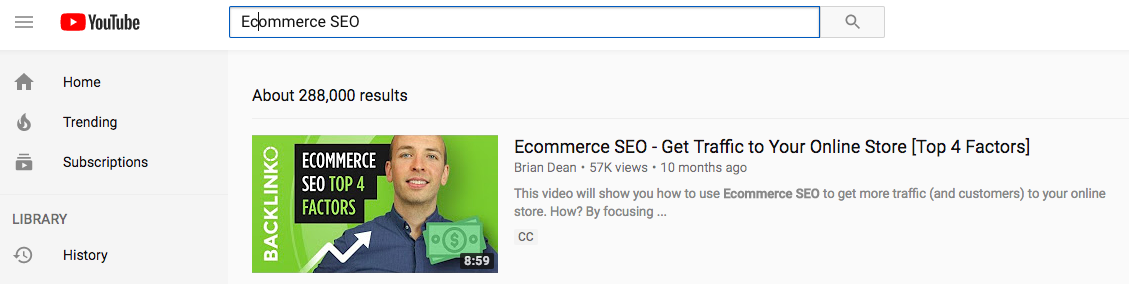
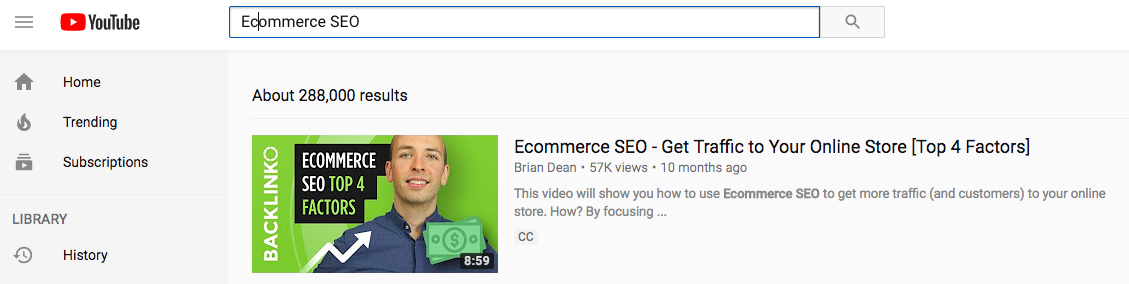
If you enter the term “ecommerce seo” into YouTube, the following video shows up in the number one spot:

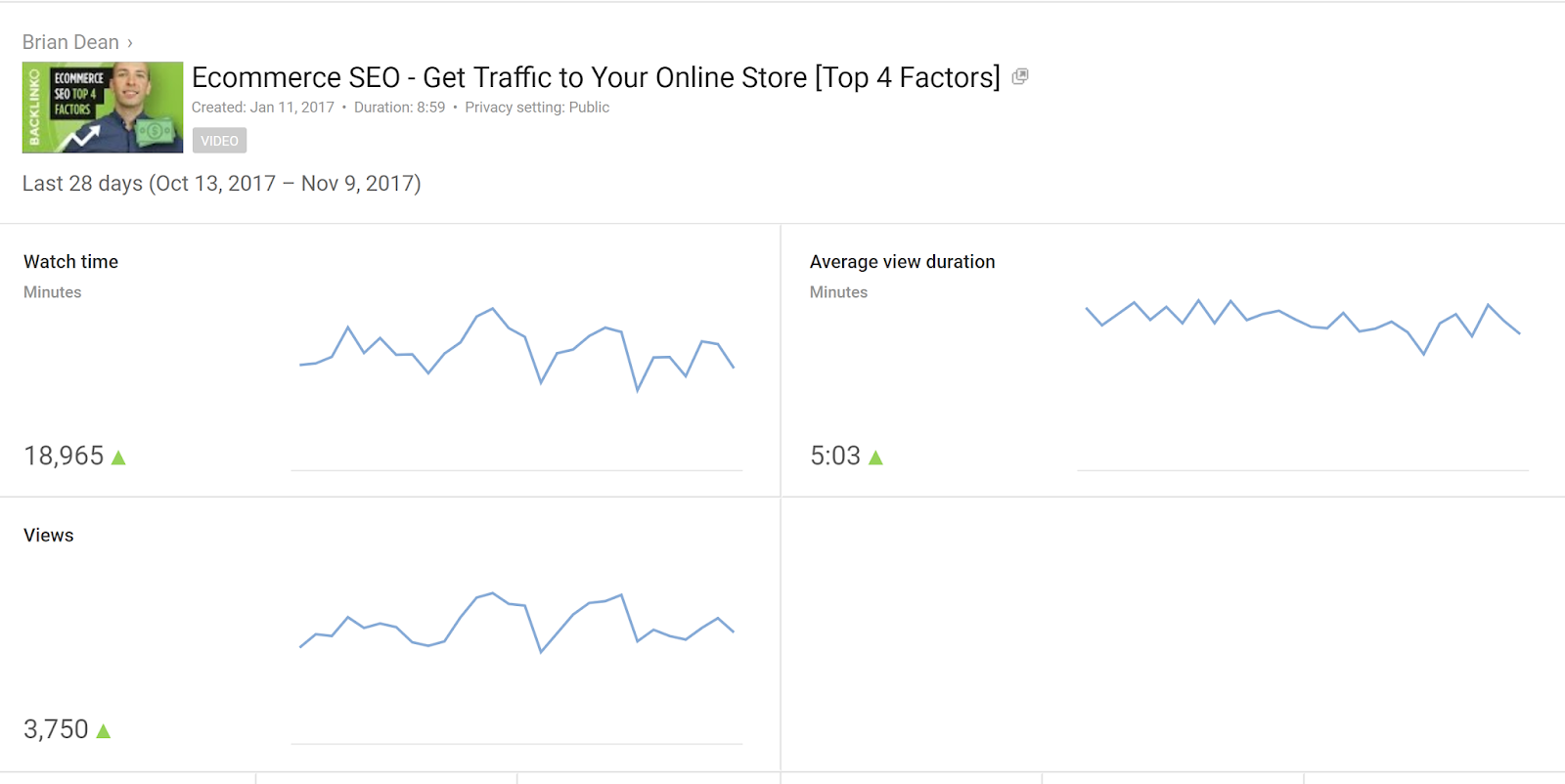
It was published Jan 11, 2017 and was in the number one spot six months later. The video has received over 57,000 views total, and more than 3,750 just within the past month.

You might be wondering, who really cares? What does the number one ranking on YouTube really give you? Maybe it gives you brand awareness, but does it actually bring in sales?

This particular video was created by well known SEO expert and founder of Backlinko, Brian Dean. 

I asked Brian about his YouTube video ranking, and here is what he said:

Ranking on YouTube has been one of the biggest drivers of leads and sales for me this year. I send out a ‘welcome’ email to new email subscribers. And a growing percentage (around 15%) say they first found me on YouTube. But more importantly, surveys from customers show that they're also finding me via YouTube. They also cite my YouTube videos as a specific reason that they decided to sign up.

So to boil it down, having the number one spot on YouTube:

  • Directly builds Brian Dean’s email list (people subscribe to his email after watching the video)
  • Allows Brain to cultivate personal relationships with people who watch his videos. These people feel like they know him when they return to his site after watching his video

It is not possible to track Brian’s sales numbers directly from YouTube since Brian does not add links or a lot of CTAs in his YouTube videos. Instead, Brian engages his viewers with content and waits for them to Google his name and find his blog that way.

However, the survey data for new email subscribers shows a significant uptick in people saying they found him through YouTube.

In short: YouTube is great for top of the funnel for Brian Dean, even though it does not directly generate sales.

I worked with Brian on this project, and asked him if I could document the entire process he executed, from being unranked to being the number spot on YouTube. Here are the steps and insights he shared.

Step 1: Find a Keyword

Just like with “normal” SEO, the first step in YouTube SEO is keyword research. I documented my process of researching rankings for highly competitive keywords in 90 days for articles in an experiment I ran early last year. The process is really similar to how you’d find keywords in Google.

First, you generate a list of potential keyword ideas. Then, you drill down to a handful of the best keywords.

Keyword research tools designed for Google (like SEMRush) don’t work for YouTube. To find video keywords, you need use a tool designed for YouTube. Brian recommends two:

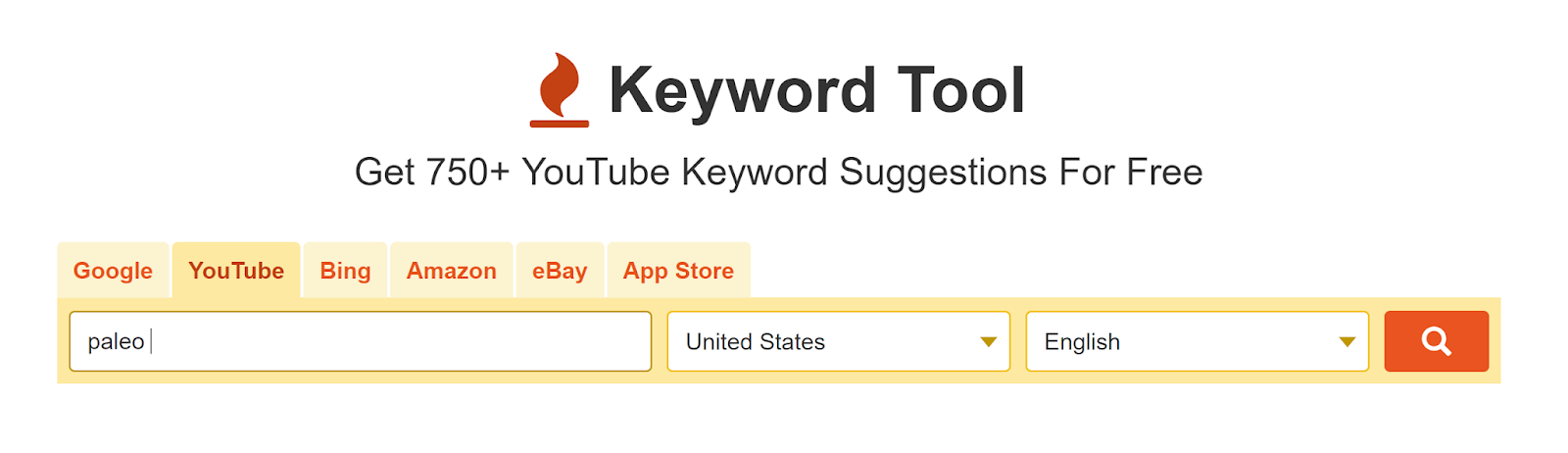
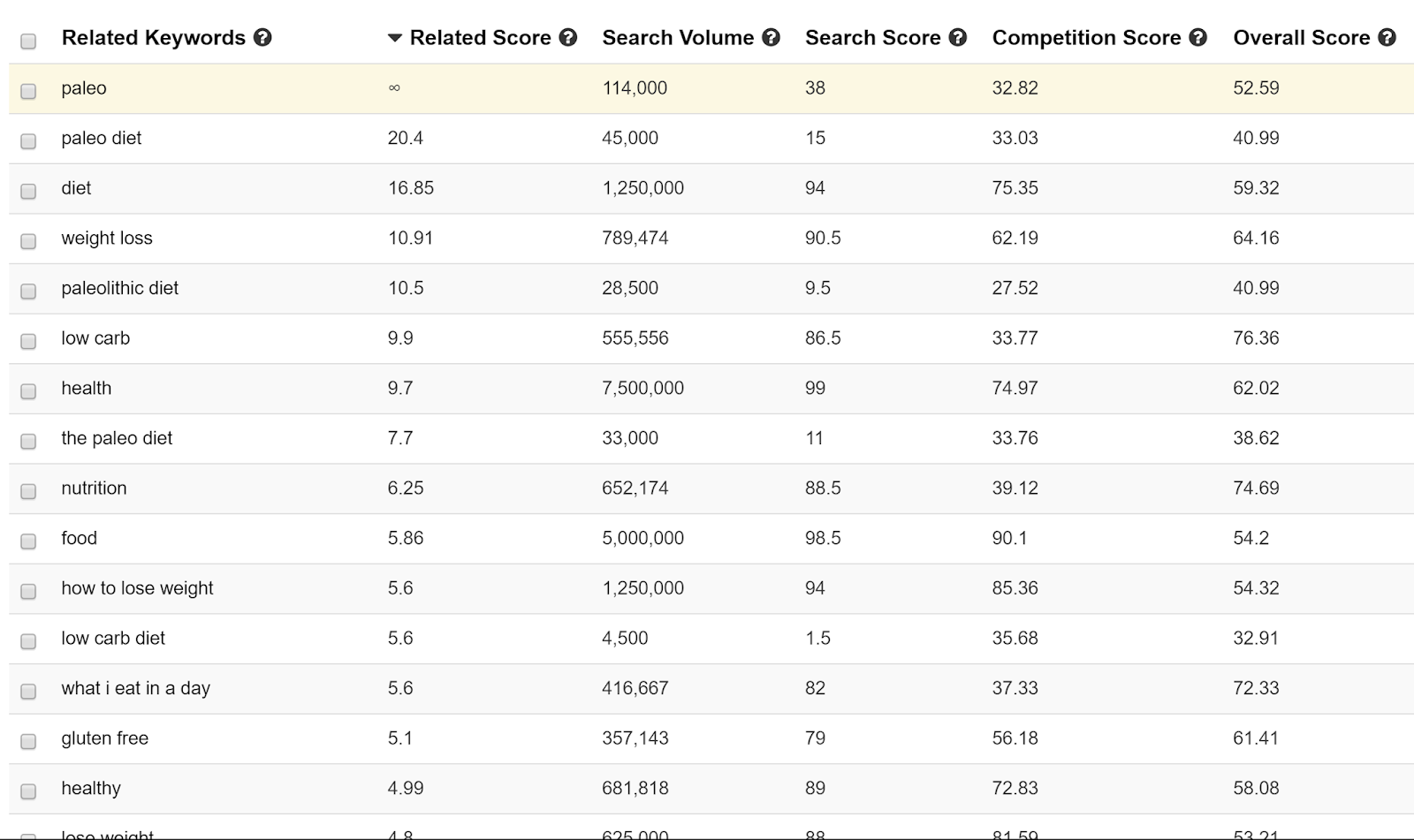
First, we have Keywordtool.com. Click the “YouTube” tab, enter a seed keyword, and it’ll scrape “YouTube Suggest” for hundreds of possible keywords.

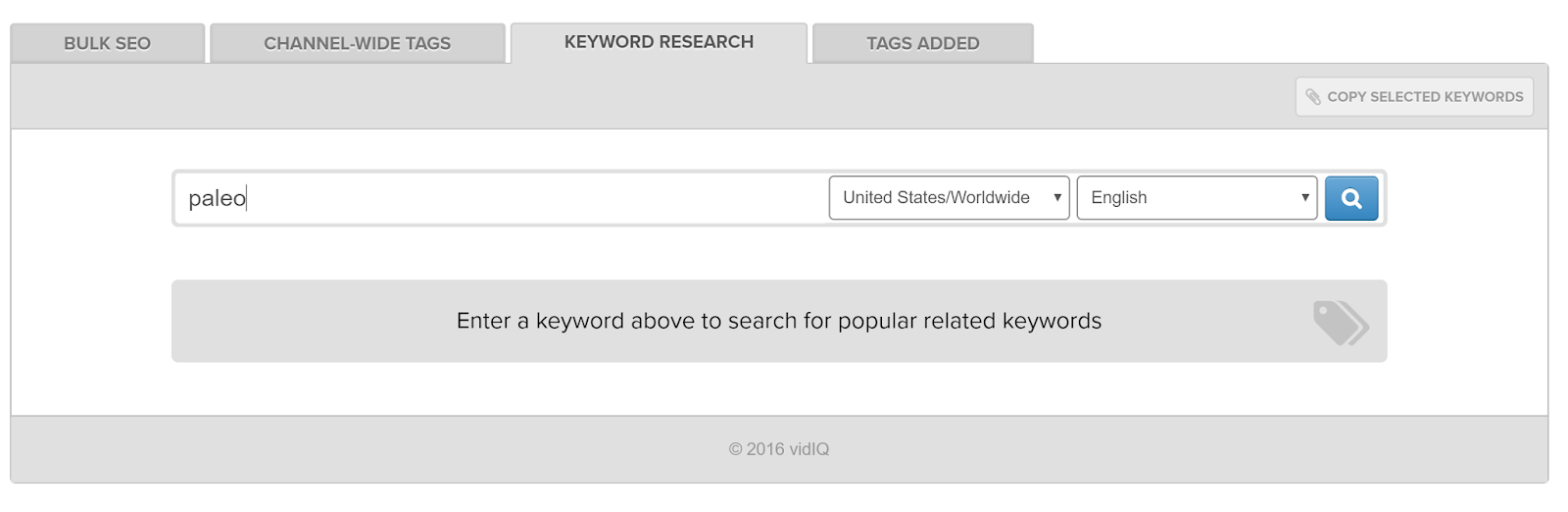
If that doesn’t do the trick, check out VidIQ. They have a nifty keyword research tool that’s like Google Keyword Planner for videos.

In addition to generating a huge list of keyword ideas, VidIQ also gives you helpful metrics (like competition and search volume) to help you find the best keyword.

Now, you should have a big fat list of keywords. But how do you choose the best one for your video topic and title?

Just like with Google SEO, choosing the “best” keyword from a list is more art than science. That said, you should choose a keyword that has these factors going for it:

  • Search volume: The more searches the better
  • Competition: Less is better (duh)
  • Market “fit”: Would your target customer search for this keyword?

For example, Brian noticed that “ecommerce SEO” got a decent amount of searches, and wasn’t super competitive, so he used that as his main keyword.


Step 2: Script Your Video

Now that you have a keyword, it’s time to get into the brass tacks of creating your video.

According to Brian, that process should start by outlining and scripting your video.

People on YouTube have VERY short attention spans. That’s why many pro YouTubers (even vloggers) script out their videos line-by-line.

A tight script ensures you stay on topic throughout the entire video.

It also helps eliminate phrases that make YouTube viewers click away (like “umms”, pauses, and “where was I…”).

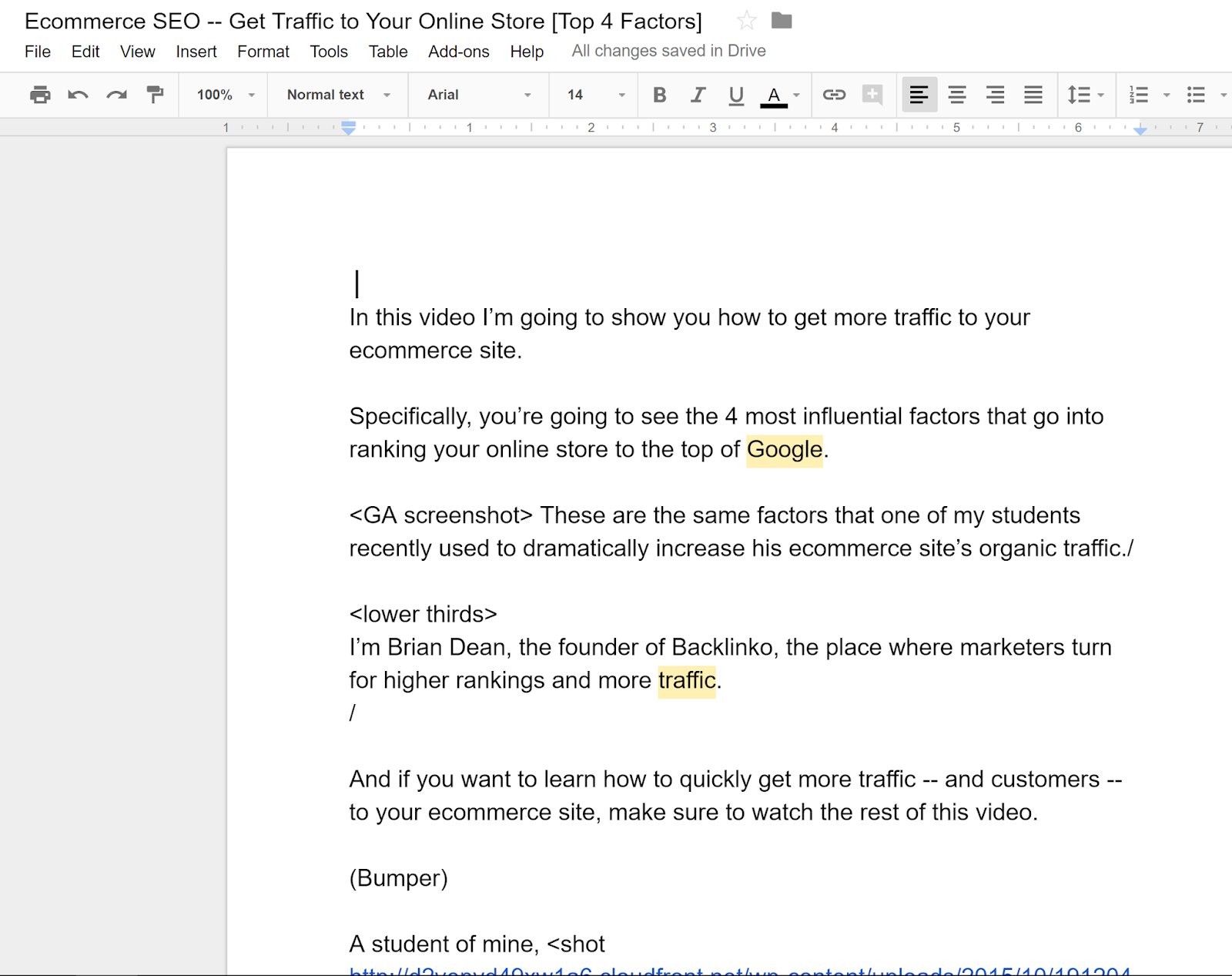
Brian tells me he meticulously writes out each script for his videos. Here’s an example:

And here’s the basic outline that Brian uses for most of his videos (including his ecommerce SEO video):

  • Intro: Preview for what is coming later in the video. He also introduces himself and his brand (Backlinko).
  • Steps or List of Tips: The bulk of the content. For case studies, this is a story told step-by-step. But sometimes (like with his ecommerce SEO video), Brian will list out a handful of tips or techniques.
  • Conclusion/CTA: Brian ends the video with multiple calls to action: one to subscribe to the channel, another to sign up for his email newsletter, and a third to comment on the video they just watched.


Step 3: Produce Your Video

Video production is a massive topic that could be its own post (or even an entire course).

Instead of trying to cover everything there is to know about video production here, I’ll link to some of my favorite resources on the topic.

I worked with the folks at Wistia on various content and PR projects a few years ago. We’re good friends and I still follow their blog. Here are some of my favorite tutorials on the topic from their learning center:

  1. The Down and Dirty DIY Lighting Kit
  2. Setting Up a DIY Office Video Studio
  3. Choosing a Background for Your Video

One of the first things you’ll notice about Brian’s video is that it’s professionally done. It's shot with a nice camera, and has nice lighting, and high-quality audio. Of course, this isn’t 100% required (plenty of successful YouTube videos were recorded with cheap cameras and even iPhones).

Here’s what Brian said about the process he used to create his ecommerce SEO video:

Personally, I use a studio to shoot my videos. But that’s 100% NOT required to do well. In fact, my first batch of videos were done in my apartment and they look almost as good. The main reasons I use a studio are a) so I don’t need to worry about production stuff like lighting etc. and b) the sound quality is usually better. So if you’re just getting started, I’d do whatever’s easiest for you.


Step 4: Upload and Optimize Your Video

OK, so you’ve created an awesome video. Now it’s time to upload and optimize it for YouTube.

Here’s how Brian optimized his video around the keyword “ecommerce SEO”.

First, Brian made sure to verbally say the term “ecommerce seo” in his video. YouTube now automatically transcribes all of its videos (and it’s pretty darn accurate, too). Brian is convinced that YouTube “listens” to your video content in the same way that a Google spider indexes the body of a webpage. I haven’t personally seen YouTube confirm this, but it makes sense.

Next, he included the keyword in his video title. Just like with a web page, YouTube wants to see the keyword in your title.

YouTube isn’t as sophisticated as Google (it lacks anything close to Hummingbird or RankBrain), so you want to use your exact keyword here (no synonyms or variations if you can help it).

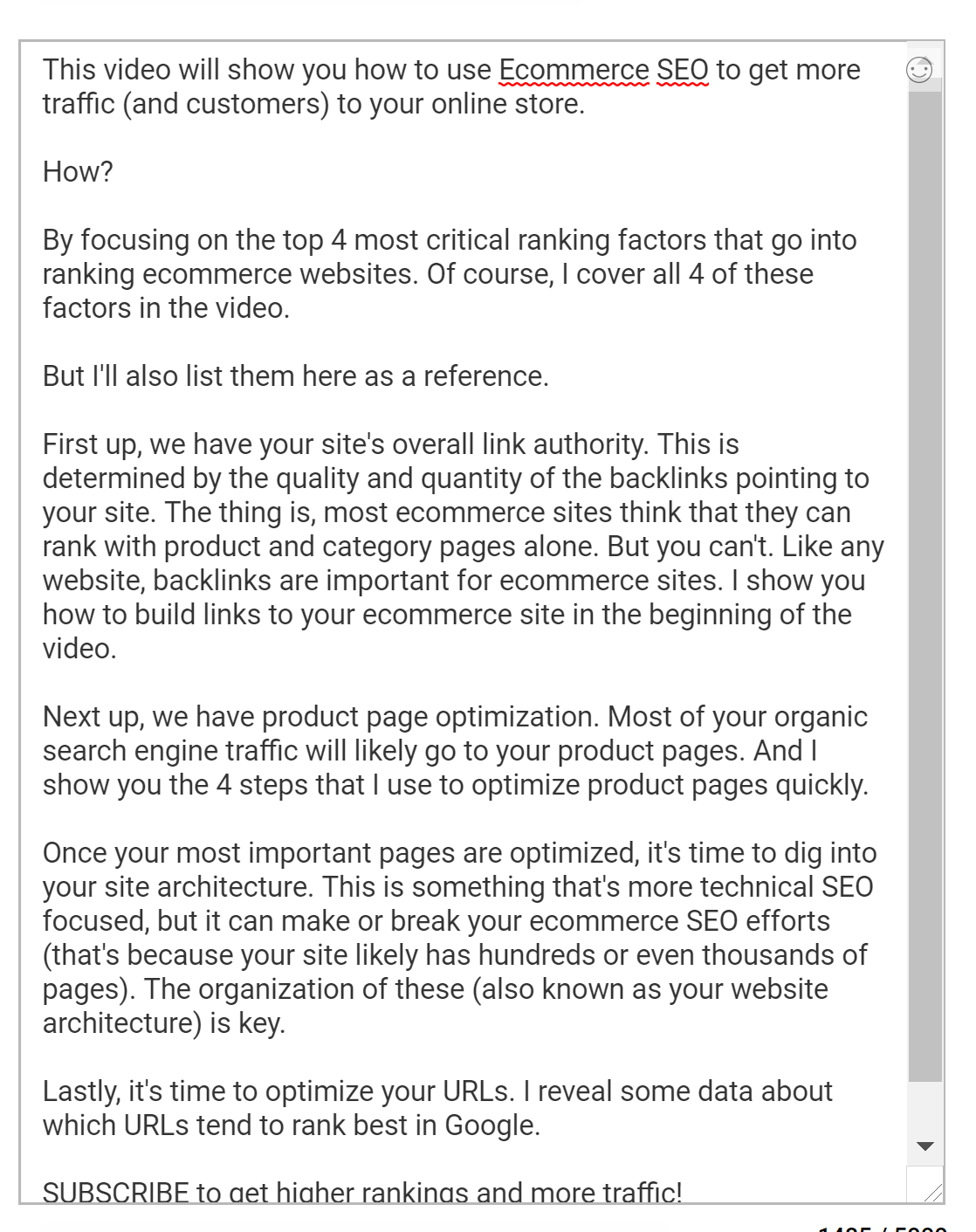
Next, it’s time to write the video description. Your video description is a summary of what your video is about. Brian prefers to write long, in-depth descriptions so YouTube has a lot of content to work with. For example, the description for his ecommerce SEO video is 252 words. This is significantly longer than most other video descriptions on YouTube.

Finally, Brian created tags for his video. As Brian found in his recent YouTube ranking factors video, tags aren’t as important as they once were. But it’s still worthwhile to tag your videos. Brian recommends a tag mix that looks like this:

  • Your exact keyword + variations (“ecommerce SEO”, “ecommerce traffic”)
  • A few broad keywords that describe the “big topic” your video falls under (“search engine optimization”)
  • A few keywords that describe topics you touch on in the video (“link building” and “on-page SEO”).

From an SEO perspective, that’s really all you can do to keyword-optimize your video. The rest is decided by YouTube algorithms based on your video’s overall quality.


Step 5: Promote Your Video

When I first talked with Brian about this step, I naturally gravitated towards an approach where you would essentially do your own PR to get the video included on different blogs and publications. However, this strategy is more of a long term approach that might take weeks or even months before you get the embed or reference to the video on a blog post.

We needed something more short term. One of the first lessons Brian learned about YouTube is that it’s extremely competitive:

When I first started on YouTube, I underestimated the competition. I thought that the sheer amount of users meant that competition wasn’t a big deal. But I was wrong. YouTube has a ton of viewers, but there’s also a ton of video content to compete with.

Just like a blog post or infographic, YouTube videos need a little “push” to get going. And one of the great things about YouTube is that it’s a discovery platform. YouTube actively promotes videos it thinks you'll like on their homepage, the "Suggested Video" sidebar, and yes, in YouTube's search results.

But YouTube needs to collect a critical mass of data on your video (by measuring likes, views, audience retention, and comments) in order to determine if people actually enjoy watching your video.

So Brian found that an initial promotional "push" gives YouTube the user feedback it needs to actively show your video to its user base.

I asked Brian how he promoted his YouTube ecommerce SEO video. Here is the process he used:

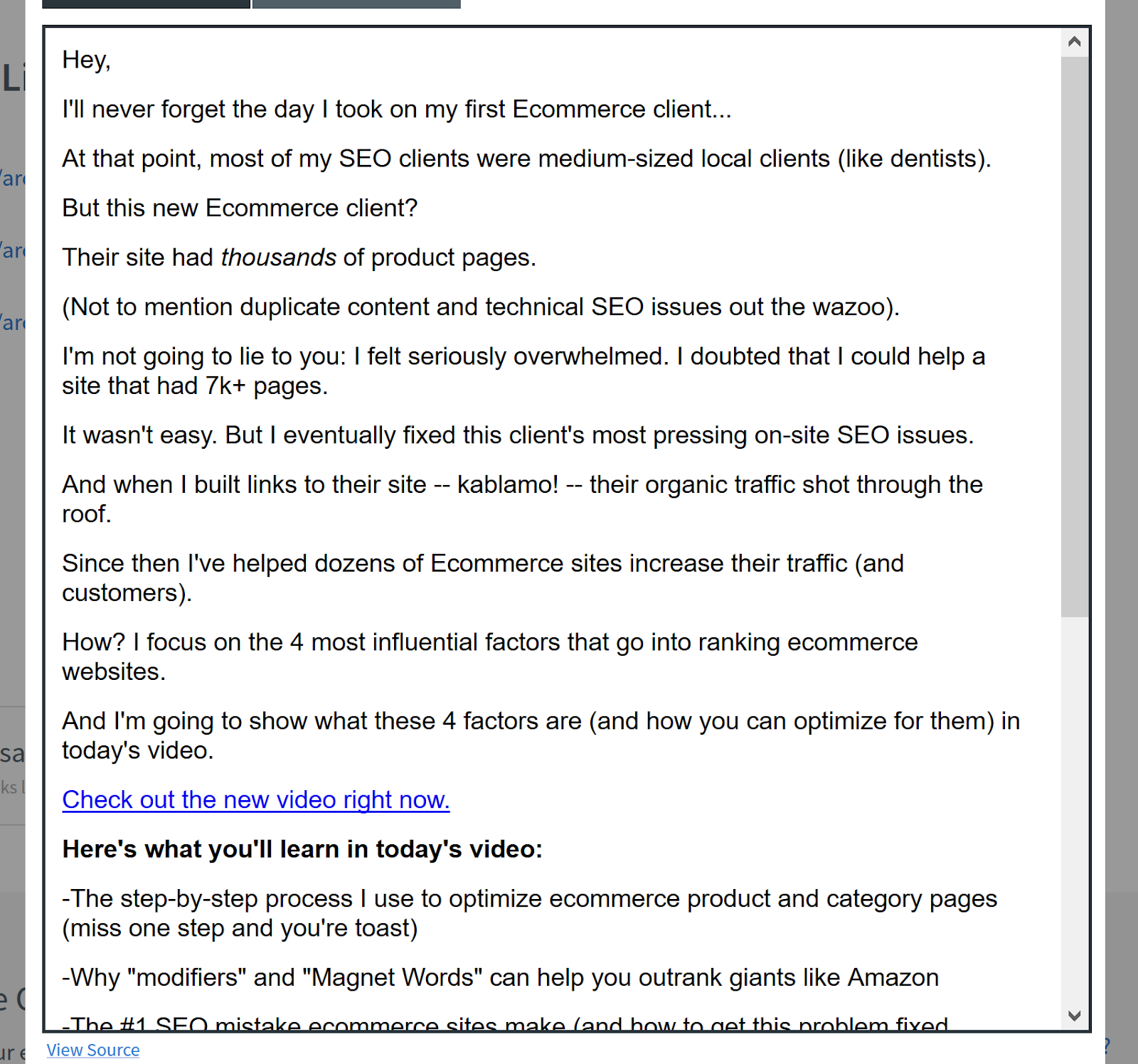
First, he emailed his email subscribers about the video. His email was brief with two links directly to his Youtube video.

Some people embed the video on their blog and send people there. Brian says that can also work, but he prefers to direct people to YouTube because then they have the opportunity to like, comment, and subscribe.

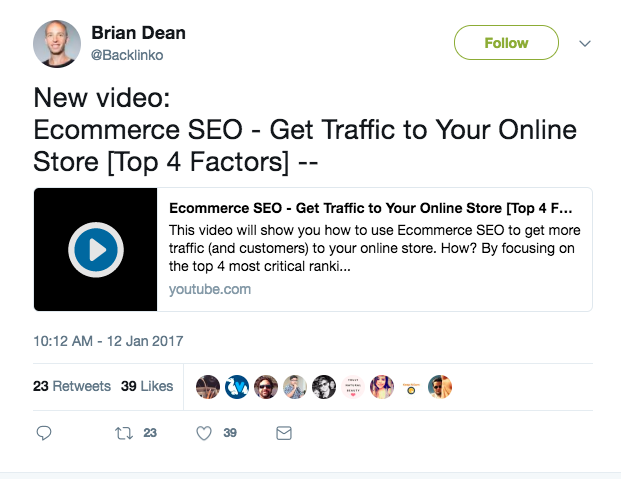
Brian also shared his video on social media (specifically, Twitter and Facebook).

Sharing on these two social networks helped Brian boost the video’s organic ranking.

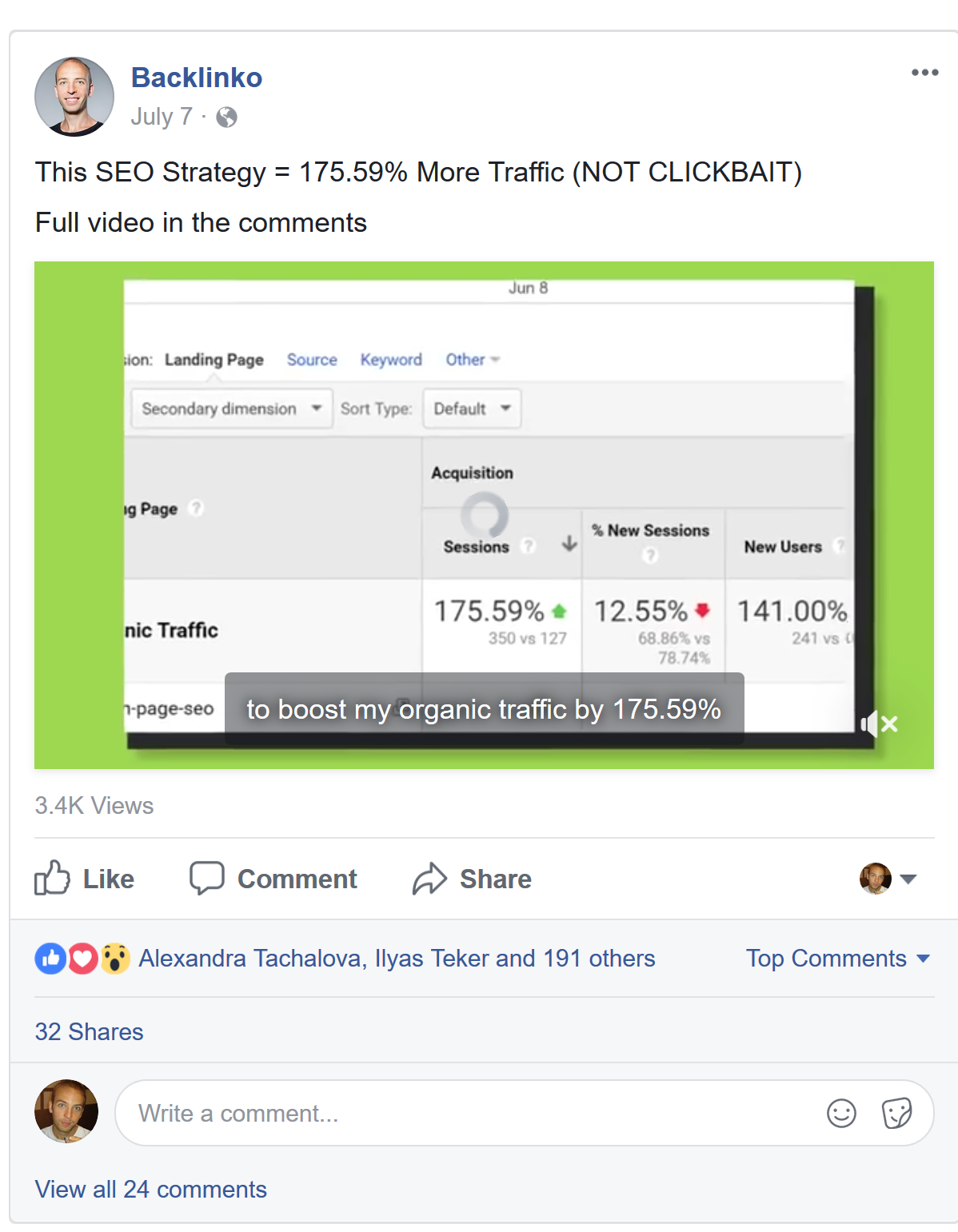
Brian also posted a preview of the video on Facebook to entice people to watch the full video, as you can see below:

As a general rule of thumb: if the video is up to snuff, and optimized well, it just needs a promotional push to get the ball rolling. YouTube takes care of the rest.

You can use Facebook, Twitter, and Email for that “little push.” Some of you might say “I don’t have such a huge audience!” Brian’s answer to that is:

You don’t need a huge audience. What you’re trying to do is get some eyeballs on your video to help Google get some data about it. You don’t need hundreds of thousands or even tens of thousands to see it, just a few thousand or so to take a look at it.

There you have it. The process Brian used to create, optimize, and promote a highly successful YouTube video that now ranks number one for a high volume keyword.

How to Diagnose SEO Traffic Drops: 11 Questions to Answer

Posted by Daniel_Marks

Almost every consultant or in-house SEO will be asked at some point to investigate an organic traffic drop. I’ve investigated quite a few, so I thought I’d share some steps I’ve found helpful when doing so.

Is it just normal noise?

Before you sound the alarm and get lost down a rabbit hole, you should make sure that the drop you’re seeing is actually real. This involves answering two questions:

A.) Do you trust the data?

This might seem trivial, but at least a quarter of the traffic drops I’ve seen were simply due to data problems.

The best way to check on this is to sense-check other metrics that might be impacted by data problems. Does anything else look funky? If you have a data engineering team, are they aware of any data issues? Are you flat-out missing data for certain days or page types or devices, etc.? Thankfully, data problems will usually make themselves pretty obvious once you start turning over a few rocks.

One of the more common sources of data issues is simply missing data for a day.

B.) Is this just normal variance?

Metrics go up and down all the time for no discernible reason. One way to quantify this is to use your historical standard deviation for SEO traffic.

For example, you could plot your weekly SEO traffic for the past 12 months and calculate the standard deviation (using the STDEV function on Google Sheets or Excel makes this very easy) to figure out if a drop in weekly traffic is abnormal. You’d expect about 16% of weeks to be one standard deviation below your weekly average just by sheer luck. You could therefore set a one-standard-deviation threshold before investigating traffic drops, for example (but you should adjust this threshold to whatever is appropriate for your business). You can also look at the standard deviation for your year-over-year or week-over-week SEO traffic if that’s where you’re seeing the drop (i.e. plot your % change in YoY SEO traffic by week for the past 12 months and calculate the standard deviation).

SEO traffic is usually pretty noisy, especially on a short time frame like a week.

Let’s assume you’ve decided this is indeed a real traffic drop. Now what? I’d recommend trying to answer the eleven questions below, at least one of them will usually identify the culprit.

Questions to ask yourself when facing an organic traffic drop

1. Was there a recent Google algorithm update?

MozCast, Search Engine Land, and Moz’s algorithm history are all good resources here.

Expedia seems to have been penalized by a Penguin-related update.

If there was an algorithm update, do you have any reason to suspect you’d be impacted? It can sometimes be difficult to understand the exact nature of a Google update, but it’s worth tracking down any information you can to make sure your site isn’t at risk of being hit.

2. Is the drop specific to any segment?

One of the more useful practices whenever you’re looking at aggregated data (such as a site’s overall search traffic) is to segment the data until you find something interesting. In this case, we’d be looking for a segment that has dropped in traffic much more than any other. This is often the first step in tracking down the root cause of the issue. The two segments I’ve found most useful in diagnosing SEO traffic drops specifically:

  • Device type (mobile vs. desktop vs. tablet)
  • Page type (product pages vs. category pages vs. blog posts vs. homepage etc.)

But there will likely be plenty of other segments that might make sense to look at for your business (for example, product category).

3. Are you being penalized?

This is unlikely, but it’s also usually pretty quick to disprove. Look at Search Console for any messages related to penalties and search for your brand name on Google. If you’re not showing up, then you might be penalized.

Rap Genius (now Genius) was penalized for their link building tactics and didn’t show up for their own brand name on Google.

4. Did the drop coincide with a major site change?

This can take a thousand different forms (did you migrate a bunch of URLs, move to a different JavaScript framework, update all your title tags, remove your navigation menu, etc?). If this is the case, and you have a reasonable hypothesis for how this could impact SEO traffic, you might have found your culprit.

Hulu.com saw a pretty big drop in SEO traffic after changing their JavaScript framework.

5. Did you lose ranking share to a competitor?

There are a bunch of tools that can tell you if you’ve lost rankings to a competitor:

If you've lost rankings, it’s worth investigating the specific keywords that you’ve lost and figuring out if there’s a trend. Did your competitors launch a new page type? Did they add content to their pages? Do they have more internal links pointing to these pages than you do?

GetStat’s Share of Voice report lets you quickly see whether a competitor is usurping your rankings

It could also just be a new competitor that’s entered the scene.

6. Did it coincide with a rise in direct or dark traffic?

If so, make sure you haven’t changed how you’re classifying this traffic on your end. Otherwise, you might simply be re-classifying organic traffic as direct or dark traffic.

7. Has there been a change to the search engine results pages you care about?

You can either use Moz’s SERP features report, or manually look at the SERPs you care about to figure out if their design has materially changed. It’s possible that Google is now answering many of your relevant queries directly in search results, put an image carousel on them, added a local pack, etc. — all of which would likely decrease your organic search traffic.

Celebritynetworth.com lost most of its SEO traffic because of rich snippets like the one above.

8. Is the drop specific to branded or unbranded traffic?

If you have historical Search Console data, you can look at number of branded clicks vs. unbranded clicks over time. You could also look at this data through AdWords if you spend on paid search. Another simple proxy to branded traffic is homepage traffic (for most sites, the majority of homepage traffic will be branded). If the drop is specific to branded search then it’s probably a brand problem, not an SEO problem.

9. Did a bunch of pages drop out of the index?

Search Console’s Index Status Report will make it clear if you suddenly have way fewer URLs being indexed. If this is the case, you might be accidentally disallowing or noindexing URLs (through robots.txt, meta tags on the page, or HTTP headers).

Search Console’s Index Status Report is a quick way to make sure you’re not accidentally noindexing or disallowing large portions of your site.

10. Did your number of referring domains and/or links drop?

It’s possible that a large number of your backlinks have been removed or are no longer accessible for whatever reason.

Ahrefs can be a quick way to determine if you’ve lost backlinks and also offers very handy reports for your lost backlinks or referring domains that will allow you to identify why you might have lost these links.

A sudden drop in backlinks could be the reason you’re seeing a traffic drop.

11. Is SEM cannibalizing SEO traffic?

It’s possible that your paid search team has recently ramped up their spend and that this is eating into your SEO traffic. You should be able to check on this pretty quickly by plotting your SEM vs. SEO traffic. If it’s not obvious after doing this whether it’s a factor, then it can be worth pausing your SEM campaigns for specific landing pages and seeing if SEO traffic rebounds for those pages.

To be clear, some level of cannibalization between SEM and SEO is inevitable, but it’s still worth understanding how much of your traffic is being cannibalized and whether the incremental clicks your SEM campaigns are driving outweigh the loss in SEO traffic (in my experience they usually do outweigh the loss in SEO traffic, but still worth checking!).

If your SEM vs. SEO traffic graph looks similar to the (slightly extreme) one above, then SEM campaigns might be cannibalizing your SEO traffic.


That’s all I’ve got — hopefully at least one of these questions will lead you to the root cause of an organic search traffic drop. Are there any other questions that you’ve found particularly helpful for diagnosing traffic drops? Let me know in the comments.


Sign up for The Moz Top 10, a semimonthly mailer updating you on the top ten hottest pieces of SEO news, tips, and rad links uncovered by the Moz team. Think of it as your exclusive digest of stuff you don't have time to hunt down but want to read!