Tuesday, January 29, 2019

How to Tell a Compelling Brand Story [Guide + Examples]
Last year, a buzzword ripped through the content marketing space that most marketers were surprisingly thrilled about and eager to implement. Shockingly, it didn’t start with “virtual” or end with “intelligence”. Instead, it was what attracted most marketers to the industry in the first place -- "storytelling".
Content marketing’s steady adoption of storytelling is an exciting new opportunity for content creators. But since we’ve spent the majority of our careers optimizing content for algorithms, it can be challenging to flex a creative muscle that’s slowly withered away from inactivity.
To help you strengthen your creative muscle and write compelling stories again, we’ll teach you the fundamentals of brand story structure and show you how three small-to-medium sized businesses have leveraged their brand story to resonate with huge audiences, despite their comparatively small size.
What is a brand story?
A brand story recounts the series of events that sparked your company’s inception and expresses how that narrative still drives your mission today. Just like your favorite books and movies’ characters, if you can craft a compelling brand story, your audience will remember who you are, develop empathy for you, and, ultimately, care about you.
When HubSpot first started, we noticed traditional, interruptive marketing didn’t appeal to consumers anymore. Due to the digital age, people were in complete control of the information they consumed -- and they were sick and tired of receiving direct mail, email blasts, and cold calls. People wanted to be helped, so we started creating educational content that aided people in solving their marketing problems.
Today, we’ve built a passionate community of inbound marketers, expanded our inbound marketing approach to the sales and customer service industries, and strengthened the inbound movement more than ever before.
This our brand story -- a simple, digestible narrative that recounts the reason why HubSpot began, and how it still serves as our purpose today.
How to Write a Brand Story
1. Highlight Your Story’s Conflict.
Check out the following story. Does it resonate with you?
A girl wearing a red-hooded cloak is strolling through the woods to give her sick grandma some much-needed food and TLC. She passes by a wolf on the way. They exchange a slightly awkward soft smile-nod combination that random colleagues usually greet each other with as they pass in the hallway. She makes it to her grandma’s house without a scratch. They eat lunch and play a game of Clue together. Grandma wins by deducing that Colonel Mustard killed Mr. Boddy in the Billiard Room with the candlestick -- what a shocker! The End.
So ... what’d you think? Did this story keep you on the edge of your seat? Or does it feel … off? For some reason, it doesn’t work, right? That’s because there’s no conflict. Despite the intense game of Clue at the end, there’s nothing at stake. There’s no tension. The wolf didn’t try to eat the girl. He didn’t even go to Grandma’s house. He barely acknowledged Little Red Riding Hood.
At their core, stories are about overcoming adversity. So if there’s no conflict presented, there’s no drama or emotional journey that people can relate to. And if your story has no drama or emotional journey, it won’t hold anyone’s attention -- let alone resonate with and inspire them.
Unfortunately, in the business world, brands are horrified to reveal any adversity or conflict they’ve faced. They believe that spinning a rosy, blemish-free story about how their company only experiences hockey stick growth will convince people that they’re the industry’s best-in-class solution. Any adversity or conflict during their company’s history will expose their imperfections, deterring potential customers from buying their product.
But, in reality, this is a huge misconception. Nothing’s perfect. Everything, including companies (especially companies), has flaws. Plus, people don’t relate to perfection. They relate to the emotional journey of experiencing adversity, struggling through it, and, ultimately, overcoming it. Because, in a nutshell, that’s the story of life.
Conflict is key to telling compelling stories. So be transparent about the adversity your company has faced, and own it. The more honest you are about your shortcomings, the more people will respect you and relate to your brand.
2. Don’t Forget About Your Story’s Status Quo and Resolution
Conflict isn’t the only thing you should focus on when crafting your brand story. A compelling story has two other fundamental elements -- the status quo and resolution.The status quo is the way things are or the initial nature of your situation. The conflict disrupts this situation and puts something at stake, forcing the protagonist (your brand) to actively find a solution to this problem. The resolution describes how the protagonist solves the problem, giving your audience an emotional payoff.
In sum, your brand’s story structure should look like this -- status quo, conflict, and resolution. It’s as simple as that.
If you need an example to crystalize brand story structure in your mind, let’s go over the actual Little Red Riding Hood story, as well as some brands who are nailing their brand stories right now.
Little Red Riding Hood
Status Quo: Little Red Riding Hood walks through the woods, on her way to deliver food to her sick grandma.
Conflict: A Big Bad Wolf approaches her, and asks where she’s going. She naively tells him where her grandmother’s house is, so he suggests she picks some flowers as a present for her. While she’s distracted, he breaks into Little Red Riding Hood’s grandmother's house, eats her, and puts on her clothes to impersonate her.
When Little Red Riding Hood gets to her grandmother’s house, she notices some subtle changes in her grandmother appearance but ultimately ignores them and hops into bed with her. The wolf swallows her whole. He falls asleep from a massive food coma.
Resolution: A hunter hears Little Red Riding Hood’s screams, bursts through grandma’s door, and cuts open the wolf’s stomach, setting Little Red Riding Hood and her grandmother free. They then fill the wolf’s body with heavy stones, and when he wakes up and tries to run away, he topples over and dies.
Now -- wouldn’t you say that was a little more compelling and entertaining than finding out Colonel Mustard can wield a candlestick as a murder weapon? I would, too.
The thing is, some small brands are leveraging this same exact story structure to generate massive amounts of brand awareness and affinity. Read on to find out exactly how they do it.
Brand Story Examples
- Unthinkable Media
- Grado Labs
- Drift
1. Unthinkable Media
Unthinkable Media is a creative agency that produces original, narrative-driven podcasts for B2B brands. Their mission is to create refreshing, entertaining shows for clients that can actually retain people’s attention, not just acquire it.
Here’s a rundown of their brand story, which is also fleshed out in one of the founder’s blog posts:
Status Quo: As makers and marketers, we want our audience’s attention, and so for years, we focused our efforts on acquiring it.
Conflict: But today, thanks to multiple screens, ubiquitous and instantly accessible content, and endless choice in nearly every competitive niche, the buyer now has total control. They only choose experiences they genuinely enjoy. It is no longer enough for us to simply acquire our audience's attention.
Resolution: We need to hold it. That is our new mandate as makers and marketers. We need to shift our focus from impressions and traffic to subscribers and community. Everything we are trying to achieve becomes possible and gets easier when our audience spends minutes or even hours with us, not seconds. Don't just acquire attention. Hold it.
2. Grado Labs
Grado Labs is a third-generation, family-owned headphone and cartridge company. They don’t believe in advertising, have operated in the same building for over a century, and even make their headphones by hand. So why do they choose to operate like this when huge brands like Beats by Dre, Sony, and Bose have celebrity endorsers and mass-produce their headphones? Check out our interpretation of their brand story to find out.
Status Quo: Music is an essential part of the human experience. Without it, life just isn’t as colorful and exciting. And we believe quality headphones amplify the pleasant, emotional experience of listening to music.
Conflict: In a market where every headphone brand has an enormous advertising budget, state-of-the-art facilities, and high-tech machines that can churn out as much product as they want, all of which we don’t have, why do we choose to not conform?
Resolution: Sound comes first. We’re craft-driven creators, meaning we prioritize producing the best product over generating the most hype. And by creating a better pair of headphones at the expense of publicity and growth, we can serve our customers better and foster a fervent passion for our product.
3. Drift
Drift is a conversational marketing platform that helps businesses connect with prospects through genuine, empathetic conversations and interactions. In 2016, they shocked the content marketing world by scrapping arguably the most reliable lead generator from their website -- forms.
Even though they were initially anxious about getting rid of a lead generation machine, they knew ungating every piece of content on their website would allow them to align with their mission, put their customers first, and offer as much value as possible, which would produce better long-term results. Here’s our interpretation of their brand story.
Status Quo: The crux of content marketing is treating people like humans. So, we’ve done what most other companies have done: created content that aims to help and educate our customers. And in exchange for adding value to their lives, customers are likely to return the favor with their attention, trust, and action.
Conflict: But as much as we preach about putting the customer first, we don’t practice it. Instead of offering the most value we possibly can, we make people give us their contact information in exchange for the very thing we promise is free. Then, with their contact information, we email and call them until they either unsubscribe or eventually buy. No one actually enjoys filling out forms, becoming a lead, and getting nurtured. Our ulterior motive is crystal clear. So are we actually being customer-centric?
Resolution: Let’s get rid of all our forms. If we really want to practice what we preach -- putting our customers first and providing a more human and empathetic marketing experience -- we should offer all of our content for free, with no strings attached.
Tell Your Brand’s Real Story, Not It’s Highlight Reel
Whether you’re publishing your brand story on your website or using it to inform your overall mission, make sure it’s fact, not fiction. Spitting out a highlight reel, like almost every other brand does, won’t actually resonate with people. Instead, it's crucial you tell the honest truth about the adversity your company has faced, and how you’re working to overcome it. Because what people relate to and get inspired by isn’t endless success -- it’s the rocky journey of pursuing a goal, getting knocked down, and, ultimately, finding a path toward success.

What Is Twitter and How Does It Work?
Twitter, a social networking site launched in 2006, is undoubtedly one of the most popular social media platforms available today, with 100 million daily active users and 500 million tweets sent daily.
Twitter can be used to receive news, follow high-profile celebrities, or stay in-touch with old high school friends.
But its popularity can be intimidating -- if you don't know how to use Twitter in 2019, should you even bother trying to join the masses who've acquired years of experience on the site?
Fortunately, Twitter is incredibly easy to use. Here, we'll cover what Twitter is, who uses Twitter, and how you can get started on the site, today.

What is Twitter?
In 2006, Jack Dorsey, co-founder of Twitter, had an idea -- he would create a SMS-based communications platform in which friends could keep tabs on each other by updating statuses. In the beginning, Twitter was an idea all-too-similar to texting.
The idea evolved, in large part due to brainstorming sessions with Dorsey's co-founder, Evan Williams.
On March 21, 2006, Jack sent the first tweet, which read -- "just setting up my twttr."
Twitter saw explosive growth at the 2007 South By Southwest Interactive conference, during which more than 60,000 tweets were sent. The Twitter team took advantage of the conference to begin growing their user base.
Twitter began as an SMS-based platform, so the 140 character limit was initially simply a necessity -- mobile carriers imposed the limit, not Twitter.
However, as Twitter grew to become a web platform, they kept the limit simply because it aligned with Twitter's brand -- Twitter is a platform that aims to create highly skimmable content for our tech-heavy, attention-deficit modern world.
Twitter has grown exponentially over the past 10+ years. Its purpose is ultimately to spread information fast -- while that information is not always serious (Kim Kardashian's thoughts on makeup, for instance), it sometimes is (like when Iranian protesters used Twitter to assemble marches).
In many ways, Twitter has both unlimited meaning and immeasurable potential. It can connect you with someone in Thailand as quickly as it can introduce you to your next-door neighbor. You might choose to fill your feed with industry professionals, news sites, celebrities, comedians, or friends.
By enabling each user to curate their content to their personal desires and interests, Twitter has successfully created a highly-addictive platform.
What is Twitter used for?
Twitter is a social media site, and its primary purpose is to connect people and allow people to share their thoughts with a big audience. Twitter allows users to discover stories regarding today's biggest news and events, follow people or companies that post content they enjoy consuming, or simply communicate with friends. Additionally, PR teams and marketers can use Twitter to increase brand awareness and delight their audience.
Twitter for Marketers
Twitter can be a very helpful platform for growing a following and providing your audience with valuable content before they even become customers. The character limit can also help you create quick-and-compelling advertisements, like a shout-out to a webinar your business is conducting, or a free e-book.
It's important to note, you can use Twitter to advertise your products or services, but you should do so sparingly. Like any social media marketing strategy, your primary focus should be on attracting an audience with useful content and growing brand awareness.
Additionally, you can use Twitter to connect with your audience in personal and meaningful ways. If someone mentions one of your products or services, you can "like" or "retweet" their comment. Alternatively, if a customer complains about your services on Twitter, you can reach out to rectify the situation in real-time.
To learn more about how to use Twitter for marketing purposes, take a look at How to Use Twitter for Marketing & PR.
Twitter for Reporters
Twitter has often been used to spread breaking news quickly -- at times, it's even faster than traditional media outlets at spreading groundbreaking information quickly.
For instance, when the US Airways plane crash-landed in the Hudson River in 2009, Janis Krums was one of the first to spread the word via Twitter, before many media outlets even caught on:

As a reporter, you could amass a large following by tweeting short descriptions to alert your audience of daily events.
Additionally, many celebrities, athletes, and politicians choose to post on Twitter directly rather than speaking through media outlets when they want to share information with their fans -- so Twitter is often a helpful avenue when you're looking for insider information or direct quotes to use for an article.
Of course, there's a danger in using Twitter as a primary source of news -- the limited character count, for one thing, enables Twitter users to spread one-sided information without having the space to offer the full-story. If you're a reporter, it's likely best if you use Twitter to post short snapshots of larger events, but stay clear of offering controversial opinions when you don't have the text space to back it up.
Twitter for PR Teams
If you work in PR, you might consider using Twitter to post announcements about one of your clients -- for instance, you could tweet about a release date for a client's product, or an upcoming event.
Twitter can also help you quickly figure out what your client's competitors are discussing, to ensure your client is up-to-date on industry trends, and participating in the larger conversation.
Finally, Twitter allows you to network with professionals or influencers who might have an interest in working with your client.
Twitter for Individuals
You can use Twitter for entertainment purposes, or to stay in contact with friends and family. At its most basic, Twitter is similar to sending out a 140-character mass text to everyone you know -- you could use it to share a funny story, post a compelling video, or ask your audience a question. The choice is yours.
How does Twitter work?
Twitter is a social networking site in which you can post 140 character status updates, otherwise known as "tweets", that can be seen by anyone who has chosen to follow you. Within the tweet, you can link to other articles or videos. Additionally, you can scroll through your Twitter homepage to see what other people, who you've chosen to follow, are posting. For instance, you can use Twitter for professional use only, and choose to follow industry leaders in your field. Alternatively, maybe you just follow comedians, and use Twitter as a source of amusement.
If you're ready to get started with Twitter, here's how it works -- don't worry, it's relatively simple.
First, create a Twitter account. Then, once you're ready to use Twitter, follow these steps:
How to Post a Tweet
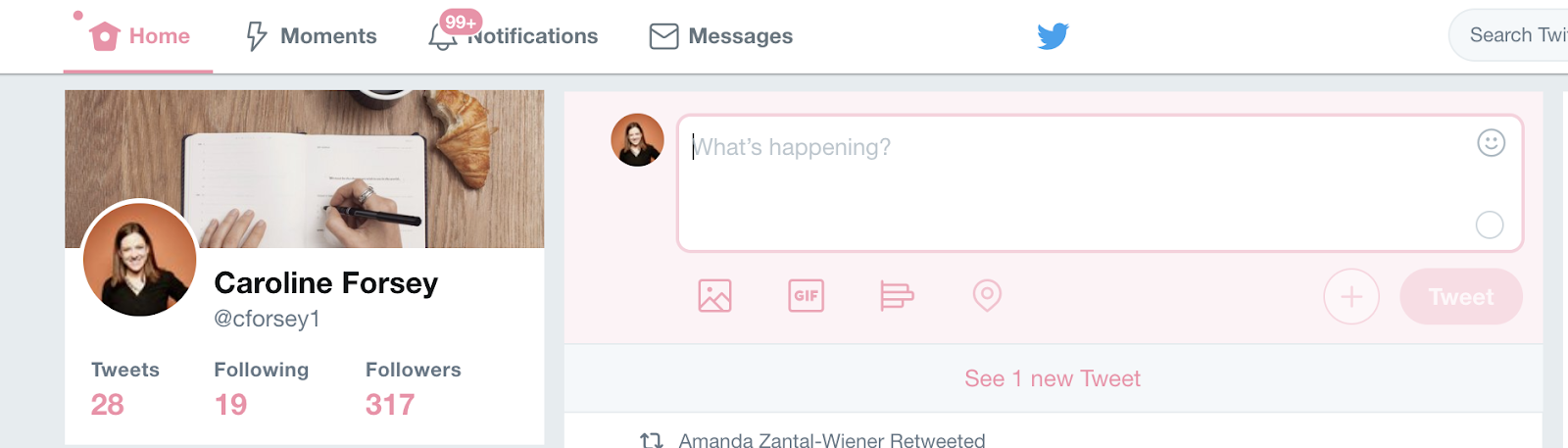
If you're interested in posting something, you'll want to click the text box that says "What's happening?". You can include pictures, a GIF, or a poll using the icons below the text box.
If you're not sure what to post, consider pasting a URL into the box of a funny video or interesting article, with your own brief personal take on the content.
When you're ready, press "Tweet".
How to Peruse Popular Content and Follow People on Twitter
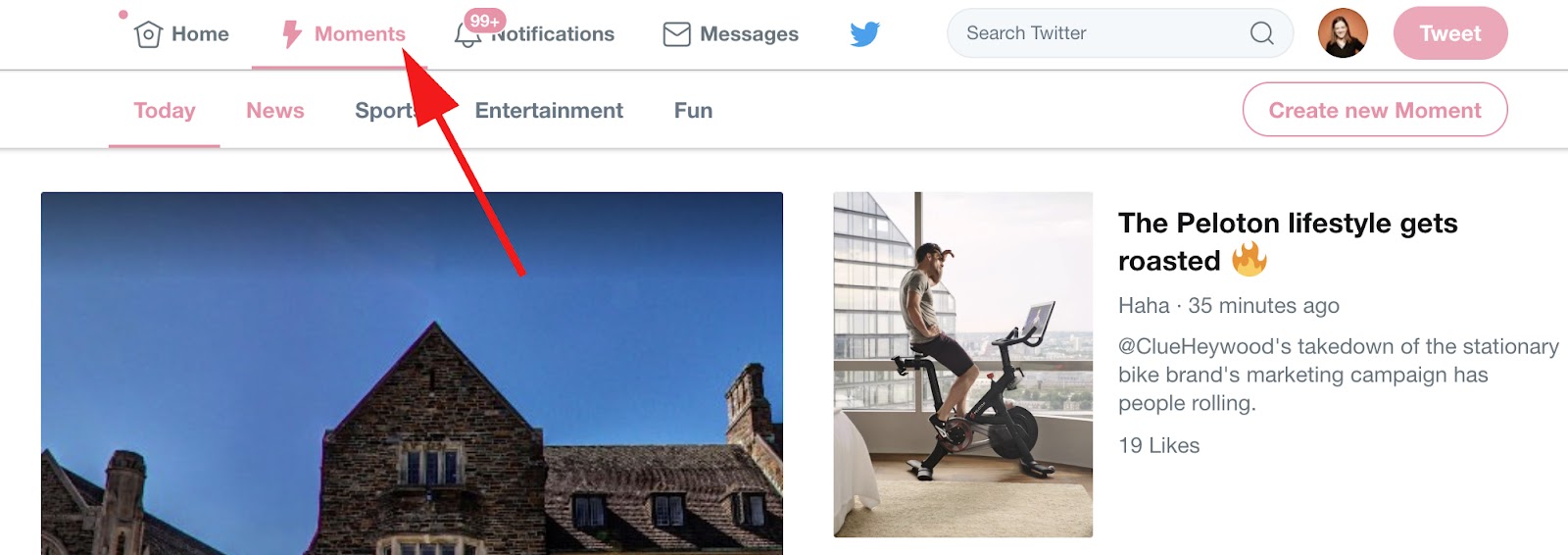
To peruse popular content, you can click the "Moments" section at the top. This will show you trending topics in a variety of subjects, including News, Sports, Entertainment, and Fun.
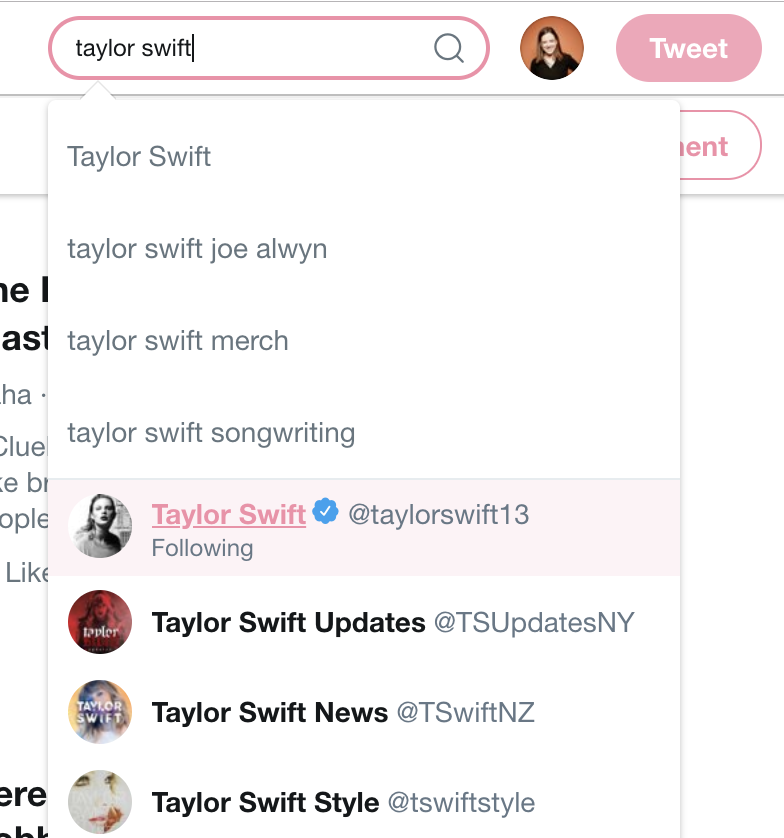
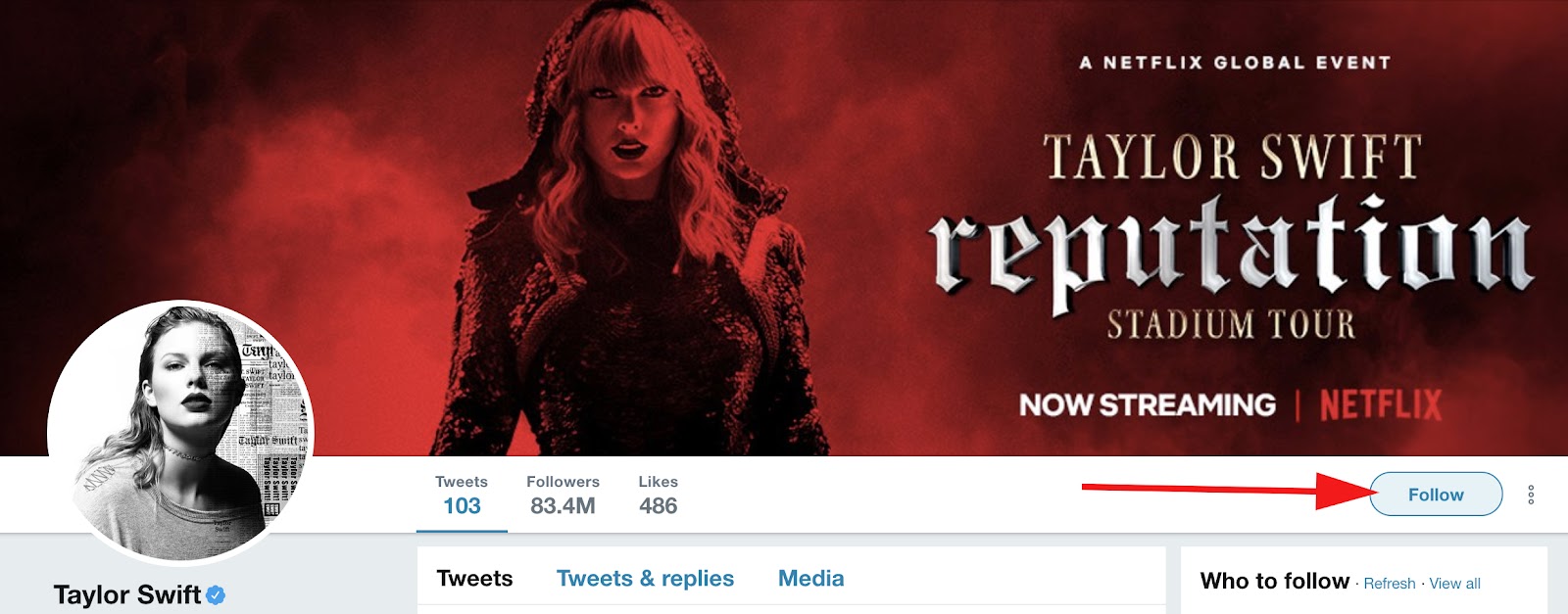
To follow specific people, you can type their name into the search box. When you click on their name, you'll be directed to their profile. There, click the "Follow" button to the right to begin following them -- this means any tweets they post will appear on your homepage.
How to Engage With Other People's Tweets
To engage with someone else's content, you can "Retweet" it. This allows you to share someone else's tweet with your own audience, and to show your agreement or approval of the tweet (for instance, if someone posts a video of a good song and says "This is the best song!" and you retweet it, you're signaling to your audience that you also like the song and want to share it).

Alternatively, you can click the speech bubble to the left of the Retweet button if you want to comment on the tweet, or the heart to the right of the Retweet button if you want to "like" the tweet.
Finally, you can click the mail icon if you want to Direct Message the tweet to just one person, or just one specific group of people.
And that's it! You now know how to post a tweet, engage with other Twitter users, follow people, and peruse popular content on the platform. While there's still other handy tips and tricks to figure out, you have the basics down.
Next, to learn how to use Twitter for your business, check out How to Build a Community of Twitter Followers for Your Company.

HubSpot's Guide to Becoming a Better Writer
When I was nine, I wrote a short story for my avid reader base … a.k.a. my mom and dad and dog, Maggie. It was about roller coasters and featured my best friend Abby, but that’s about all I remember from my first literary masterpiece.
I’ve always loved writing, and I’m so grateful that I get to write every single day (albeit about marketing and not theme parks). I mean, I get paid to do this. How cool is that?
But just because I landed my dream job doesn’t mean I’ve stopped improving my writing. In fact, I feel more motivated than ever to discover new habits and master new writing skills.
Writing is an integral part of life. Regardless of what your job is, writing is a key part of being a great employee, student, and communicator.
We believe everyone can become a better writer — even those of us on our blog team here at HubSpot. Consider us your partners on this journey and this guide as your beacon. Use the chapter links below to jump ahead to a particular section, or keep reading to dive right in.

Writing skills improve grammar, spelling, punctuation, language, and writing style. There are also different writing skills required for different types of content, such as memos, letters, and emails.
Lastly, mastering the art of writing and the discipline required to be a writer is a skill in itself, too! (And, believe me, these skills are sometimes the hardest to master.)
Why Writing Skills Matter
Writing is a form of communication, and becoming a better writer is essentially becoming a better communicator.
We communicate all day, every day. Even when we’re not opening our mouths, we’re communicating through our body language, facial expressions, physical movements — and with our written words.
Whether you’re sending an important memo to your team at work, writing a letter to your child’s teacher, building a presentation for a potential investor, or simply emailing your doctor, writing skills help you communicate in a clear and confident manner.
Where Writing Skills Matter
Writing skills are universal. They’re applicable to almost every part of our lives.
At work, writing skills help us communicate with co-workers, managers, and customers. They help us create effective emails, presentations, blog posts, social media posts, and marketing campaigns. They also come in handy when you might be applying to new jobs using resumes and cover letters.
Writing skills also apply at home. Perhaps you’re writing an important letter to your child’s teacher, or maybe you have to state your case when applying for a bank loan or attempting to purchase a home.
Becoming a better writer can help you in a myriad of ways — and make you sound smart and confident.
Improving Your Writing Structure
Sometimes I like to think of writing like making chili … weird, I know, but let me explain.
My dad is a self-proclaimed chili master. He always says that there’s a lot that goes into making a good chili: your choice of meat and how you prepare it, your choice of beans, your level of spiciness and what seasoning you choose, how long you cook it, and — finally — what you put on top. (Cheese and sour cream, anyone!?)
Weird story, Allie … what’s the point?
My point is that there’s a lot that goes into writing, too. And when you combine its components correctly (commas, gerunds, metaphors, etc.), your writing becomes a very powerful recipe.
Now, let’s talk about those individual writing “ingredients”. Below, I’ve provided a handful of tips for each component — some featuring a pretty list with bullet points.
Featured Resource:
Grammar Skills
You’ve heard people talk about grammar … probably something along the lines of: “Sorry, I am SUCH a grammar freak!” Or, the infamous you’re vs. your debate.

Grammar encompasses a lot of rules and techniques. Here are a handful of my favorite grammar tip lists.
- TechRepublic’s “10 Flagrant Grammar Mistakes That Make You Look Stupid”
- FluentU’s “8 Important English Grammar Rules That Anyone in Business Should Understand”
- Writing Forward’s “Ten Grammar Rules Every Writer Should Know”
Some writing skills are repeated in these lists, but that means they’re that much more important!
Spelling Skills
Remember when spelling was its own subject in school? As we grew up, it was phased out of our daily learning, but spelling is still a vital writing skill.
We all struggle with certain words (Feb-ru-ary, anyone?), but certain misspellings can completely change the meaning of a phrase or piece of writing — and mean massive confusion for co-workers or customers.
Below, I’ve aggregated some of the most common misuses and misspellings (as inspired by this list from the B2B Insights blog).
Continual vs. continuous
“Continual” means always occurring, whereas “continuously” means never-ending.
i.e. vs. e.g.
i.e. stands for “id est” meaning “”in other words,”” while “e.g.” stands for “exempli gratia” meaning ““for example””.
Elicit vs. illicit
“Elicit” means to evoke some sort of response, whereas “illicit” means “illegal.”
Alternately vs. alternatively
“Alternately” means to take turns –or alternate, whereas alternatively” presents one or more options.
Refute vs. rebut
Refute” is to disprove with evidence, whereas “rebut” is to disagree.
Farther vs. further
“Farther” refers to physical distance, whereas “further” refers to a greater degree of something.
Alright vs. all right
Alright is actually not a legitimate word … use “all right instead.”
Uninterested vs. disinterested
Uninterested” means to have no interest, whereas “disinterested” means to be removed or neutral to a situation.
Who's vs. whose
Who’s” is a contraction for ““who is,” whereas whose is used to show ownership of something. (The same goes for it’s vs. its.)
Than vs. then
Than is used when comparing two things, whereas then is used to express a sense of time, such as what comes next or what used to be.
Punctuation Skills
Punctuation refers to a whole host of symbols used in writing, but I’m going to review the few most popular in this section.
Periods (.), exclamation points (!), and question marks (?)
Periods should be your go-to way to end a sentence. Every sentence should end in a period (if you’re not using a question mark or exclamation point.
Exclamation points — which are used to express excitement, accentuate an important point, or get the reader’s attention — should be used sparingly! If you overuse them, they won’t be effective when you need them to be! These sentences are great examples of completely unnecessary exclamation points! Woot!
Question marks are appropriate for — you guessed it — questions. Using questions throughout your writing can help create a conversational, friendly tone (which we talk about in our language skills section below).
Commas (,), semicolons (;), and colons (:)
When I started at HubSpot, my editor told me that I was “comma happy.”
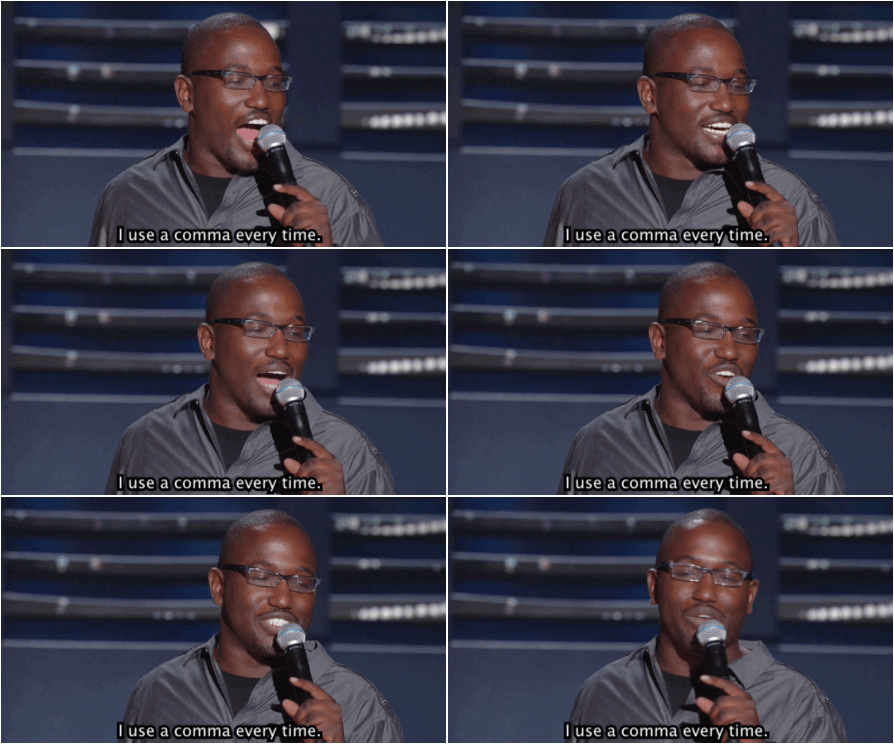
Commas pack a punch in your writing. They’re also easy to overuse and misuse. Because of that, it’s crucial to master the rules of the comma.
Next: semicolons. Where commas connect two phrases, semicolons connect two complete, related sentences. For example, the previous sentence could be re-written with a semicolon by saying: Commas connect two phrases; however, semicolons connect two complete, related sentences.
Always use “____; however, ____” when using a semicolon.
Colons are used to introduce a new point, just like in my sentence above, “Next: semicolons.”. They’re pretty easy to utilize in your writing.
Dashes (—) and hyphens (-)
Writers often confuse dashes and colons. Colons introduce something and are typically used near the end of a sentence, whereas hyphens are used to offset a phrase — not unlike commas — in the middle or end of a sentence.
Dashes just put a little more oomph on the phrase that’s set apart.
Hyphens are used to connect words to make them compound words. They’re used to connect two words that serve as an adjective for a noun (such as well-known, or caramel-covered) as well as clarify the meaning of a word (re-sign vs. resign). Hyphens also produce numbers (thirty-seven) and, with prefixes, set apart one word from another (boyfriend vs. ex-boyfriend).
Language Skills
Language refers to using certain words and writing techniques to create a great piece of writing. Consider language skills to be the proverbial “bow” on top of your grammar, spelling, and punctuation.
Here are some of my favorites.
- Employ transition words to help your reader glide from sentence to sentence and paragraph to paragraph.
- Use colorful and creative metaphors to help get difficult, complicated, or uncomfortable points across.
- Don’t be afraid to incorporate a personal anecdote or two … like my comma story above. This helps connect to your reader and present something more interesting than a simple how-to or definition.
- Look up colorful, flavorful synonyms to basic words. Painful = excruciating. Fast = rapid. Scary = chilling. Noisy = deafening. These words are more fun to read and present a more visceral, interesting piece of writing.
- Pepper in questions in your writing to become more conversational. Try not to overdo it, though, or your reader might feel like he or she is being interrogated.
- Study your audience to know which words to use (and not use) to have the greatest impact. Put yourself in your reader’s shoes.
- Read your writing out loud to test for rhythm and awkward phrasing.
Developing Your Written Content
Different types of writing require different skills. What makes for a great business memo might not be needed when writing a blog or email. Note: The writing skills we discussed above are universal and apply to each of these types of content.
Writing a Letter
There are a lot of types of letters out there: formal letters, cover letters, letters of recommendation, letters to Grandma … but the letter format you choose should always depend on your audience. If you know your recipient, a casual letter is appropriate. If you don’t know your recipient or are writing a business letter, a formal letter is best.
Featured Resource:
You should always address formal letters in a specific way, unlike informal letters to friends or family. When starting your letter, the greeting should align with your familiarity with the recipient. Informal letters can start with “Hello” or another common greeting. Formal letters should begin with “Dear _______” if you know the recipient’s name or “To whom it may concern” if you don’t. All greetings should be followed with a comma.
The body of your letter should be concise and accurate, whether informal or formal. Avoid contractions, slang, and inappropriate language in formal letters.
Always include a complimentary closing at the end of your letter. Informal letters can be closed with “With love,” “Sincerely,” or any other customary closing. Formal letters should be signed off with “Sincerely” (typically the safest bet), “Cordially,” or “Warmly.” All closings should be followed with a comma as well.
Writing a Business Memo
A business memo (short for “memorandum,” or reminder) is a type of internal business communication sent to a large team or entire organization. Business memos typically follow a simple template to ensure consistency.
When writing a business memo, you should always prioritize accuracy and brevity. Consider your audience when choosing what words and language to use. Double-check for grammar, spelling, and punctuation errors that could confuse or distract the reader. Be sure your memo is concise and to the point so that recipients clearly understand its purpose. Lastly, don’t forget to attach any necessary data and documents.
Writing an Email
Like letters, emails come in all shapes and sizes. There are marketing emails, sales emails, emails to pitch media relations, and emails that communicate with international teams.
Regardless of what kind of email you’re writing, here are a few tips that can help you write a great one:
- Write an outstanding subject line … literally. Make it stand out so people open your email.
- Keep your email focused. Consider dropping any extraneous greetings or unnecessary information. Break up your message so it’s not just one long block of text.
- Watch out for robotic writing. Read your message out loud to help combat this.
- Avoid hedging language, which can make you sound less confident and weaken your writing.
Featured Resources:
- 25 Proven Sales Email Templates
- The Beginner's Guide to Email Marketing
- How to Create Email Newsletters That Don't Suck
Writing a Blog Post
At HubSpot, we love writing blog posts. They’re fun, straightforward, and often informal ways to connect with our customers and readers.
Everyone should know how to write a blog post. While maintaining a blog takes some extra work, writing up the blog posts isn’t hard at all. In fact, we’ve made it easier — simply download our five free blog post templates and dive right in.
In the meantime, here’s our super-simple blog writing formula:
- Identify your blog post topic
- Brainstorm a working title
- Draft a captivating intro
- Outline your content
- Write the blog post
- Edit, proofread and format the post
- Add a CTA and optimize for SEO
- Finalize your title, and publish!
Learn more about this process in our step-by-step guide on writing a blog post. Want to learn how to write other types of content? Check out our guides on writing video scripts, compelling copy, business proposals, and press releases.
Featured Resources:
Nurturing Your Writing Habits
Writing skills are both technical and habitual. You could become a grammar guru, punctuation pro, or master of business memos … but if you never actually sat down to write, it wouldn’t matter. While the technical skills make you a better writer, building up your habitual skills actually makes you write.
Here are some writing skills and habits to build for both professional and personal purposes. Every writer (me included!) implements at least a few of these habits in order to improve their writing.
Book time on your calendar to write
Set a meeting with yourself that you can’t break, and let your co-workers and friends know that you’re unavailable for that block of time.
Assign yourself a task for each weekday
For example, I try to outline my pieces on Mondays, write on Tuesdays, submit my first draft by end-of-day Wednesday, make edits on Thursday, and submit by final draft by Friday. You could also set a word count goal for each day, such as 500 or 1,000 words. This can help break up your piece into digestible bits so it doesn't’ seem overwhelming. Each day, you can say to yourself: “I only have to get X done today.”
Go somewhere that doesn’t have Wi-Fi
Maybe you need a change of scenery. This removes the temptation to respond to emails, check social media, and generally procrastinate. Save these trips for days on which you don’t have to do research.
Give yourself time away from your writing
This is especially important if you have to do a final sweep-through or round of edits. After spending hours and hours on a piece, it can be hard to see minor errors or gaps in the writing. Sometimes stepping away and coming back can give you a fresh set of eyes.
Read. Read. Read.
Read the writers and writing styles that you admire and aspire to be/recreate. Subscribe to your favorite blogs. Bookmark those websites and publications that you love reading. Download any e-books or digital guides that catch your eye. Buy your favorite books — which supports your favorite authors, too! You’ve heard the saying, “You’re a byproduct of your environment,” right? The same goes for your writing.
Using Writing Resources to Become a Better Writer
Even the best writers are continuously learning. Below, we’ve collected a handful of writing resources for you to bookmark and use as you improve your writing skills.
Courses
- HubSpot Academy, notably our Business Writing Course: Master High-Impact Writing With Bestselling Author Daniel Pink.
- MasterClass, which offers access to online courses taught by the “world’s greatest minds”. Their writing courses feature teachers like James Patterson, Judy Blume, Malcolm Gladwell, Shonda Rhimes, Aaron Sorkin, and Margaret Atwood.
Tools
- Grammarly, a free digital copyeditor. Available as a web or desktop app and for a fee, you can access many premium features.
- Hemingway Editor, a free digital copyeditor for more editorial, creative writing. Also available as a web or desktop app.
- Definr, a super quick digital dictionary.
- Jargon Grader, a simple tool to check your writing for jargon and fluff.
- Tone Analyzer, a pretty cool tool that assesses the different tones (anger, confidence, tentativeness, etc.) in your writing.
Blogs and Guides
- Grammar Girl, both a blog and podcast that provide quick tips to improve your writing.
- Purdue University Online Writing Lab (OWL), a very trustworthy site for any questions about writing or grammar.
Over to You
Building and improving your writing skills is a continuous process. From technical skills for grammar, punctuation, and spelling to skills that help you hone a disciplined writing process, there are many tips and techniques to master and remember.
Whether you’re learning how to write better emails to your team at work or are chipping away at that dream of writing a book, we’re here to help. Bookmark this guide for future reference, and start writing!

Monday, January 28, 2019
21 Great Examples of PowerPoint Presentation Design [+ Templates]
We can all agree there's more than one way of doing something.
For example, some people default to the "loop, swoop, and pull" method when they tie their shoes, while others swear by the "bunny ears" technique. Either way you swing it, your shoes get tied, right?
The trouble is, in some areas of life, different approaches don't always return the same results.
When it comes to presentation design, for instance, there's no shortage of avenues you can take. And while all that choice -- colors, formats, visuals, fonts -- can feel liberating, it's important that you're careful in your selection as not all design combinations add up to success.
We're not saying there's one right way to design your next PowerPoint presentation, but we are saying that some designs make more sense than others. Luckily, new versions of PowerPoint actually suggest ideas for you based on the content you're presenting. In this blog post, you'll learn how to create an awesome PowerPoint deck and then see 21 real presentations that nail it in exactly their own way.
PowerPoint Design Ideas
It's impossible for us to tell you which design ideas you should go after in your next PowerPoint, because, well, we don't know what the goal of your presentation is. But, as it turns out, PowerPoint can make these suggestions.
In PowerPoint 2016 and later, PowerPoint is filled with interesting boilerplate designs you can start with. To find these suggestions, open PowerPoint and click the "Design" tab in your top navigation bar. Then, on the far right side, you'll see the following options:
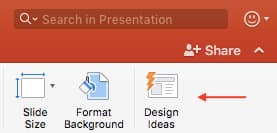 Click the "Design Ideas" option under this Design tab, as shown in the screenshot above. This icon will reveal a vertical list of interesting slide layouts based on what your slides already have on them.
Don't have any content on your slides yet? You can easily shuffle this vertical list of design ideas by clicking various slides themes inside the color carousel to the far left of the Design Ideas icon, as shown below:

As you browse and select from the themes shown above, your Design Ideas pane to the right will interpret them and come up with layouts such as:
Paint Splash
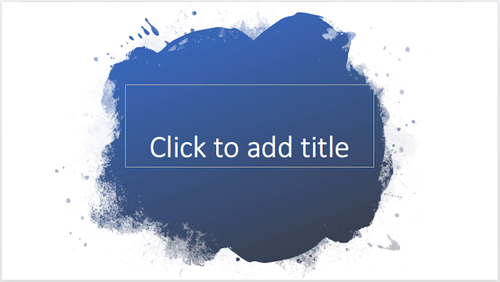
Covering a more creative subject for a younger or more energetic audience? On behalf of PowerPoint, might we suggest the cover slide design above?
Artistic Curves
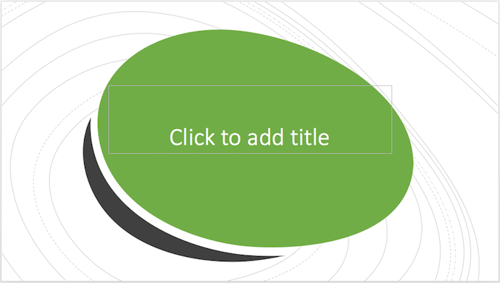 This design doesn't have the intensity of the first slide on this list, but it maintains a sense of informality that all PowerPoint presentations benefit from.
Wallpaper
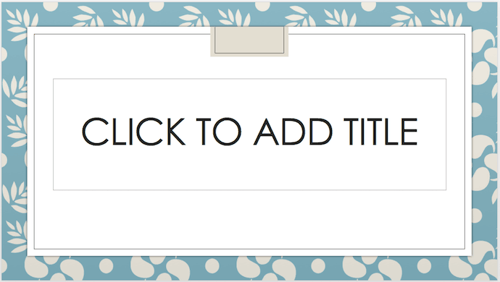 There's an old-fashioned feel to the design above that sets a fun but relaxing tone for its audience.
Warm Tiles
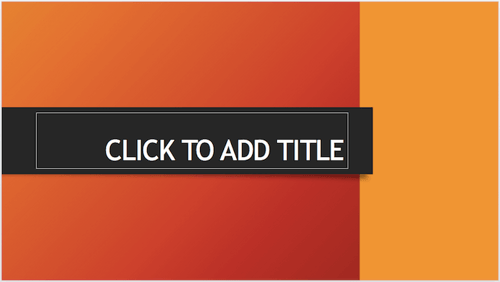
This design idea focuses on warm colors, helping to emphasize the black title tile on top of it.
Textured Backdrop
 We're particularly fond of this PowerPoint design style. By using real textures -- like wood, as shown above -- you add depth to your slides. This can help your content capture and hold your audience's attention more easily.
To see some examples of the best PowerPoint presentation designs, check out the following decks.

21 Good Examples of PowerPoint Presentation Design
1. "The Search for Meaning in B2B Marketing," Velocity Partners
We've said it once, and we'll say it again: We love this presentation from Velocity Partner's Co-Founder Doug Kessler. Not only is the content remarkable, but the design is also quite clever. While each slide employs the same background visual, the copy in the notebook unfolds brilliantly through a series of colorful doodles and bold text. This gives the presentation a personal feel, which aligns with the self-reflective nature of the concept.
2. "You Don't Suck at PowerPoint," Jesse Desjardins
If the contrast used throughout this PowerPoint presentation design were a human, we'd marry it. This skillful presentation from Jesse Desjardins employs the perfect color palette: balancing black and white photos with pops of florescent pink, yellow, and blue. The cheeky vintage photos work to reinforce the copy on each slide, making the presentation both interesting and visually appealing.
3. "Build a Better Entrepreneur Pitch Deck," Center for Entrepreneurial Innovation
Balancing visual backgrounds with text isn't easy. More often than not, the text is formatted in a way that winds up getting lost in the image. This presentation from the Center for Entrepreneurial Information combated this issue by combining a blurring effect with a shaded filter to create contrast between the bulleted text and the busy background. Well done.
4. "40 Tools in 20 Minutes: Hacking your Marketing Career," Eric Leist
When you're tasked with presenting a lot of information in a little bit of time, things can get sort of messy. To simplify this type of presentation, it's a good idea to use a visual table of contents like the one shown above. This color-coded index clearly signifies the start and finish of each section to make it easier for the viewer to follow along and keep track of the information.
5. "How to Craft Your Company's Storytelling Voice," MarketingProfs
Do you love these hand drawn illustrations ... or do you love these hand drawn illustrations? I mean, c'mon, this is amazing. Certainly it would have been easier to generate these designs online, but this approach highlights MarketingProf's commitment to investing the time and thought it takes to create an out-of-the-box piece of content. And as a result, this presentation stands out in the best way possible.6. "2015 Travel Trends," Creative Lodging Solutions
If you're going to go the minimalistic route, take note of this PowerPoint presentation example from Creative Lodging Solutions. This clean design adheres to a simple, consistent color palette with clean graphics peppered throughout to make the slides more visually interesting. Overall there are no frills or unnecessary additions, which allows the informative content to take priority.
7. "Healthcare Napkins," Dan Roam
This presentation dates back to 2009, but the design is still as good as ever. The colorful, quirky doodles help tell the story while also serving as an interesting way to illustrate data (see slides 20 and 21). For visual learners, this approach is much more inviting than a series of slides riddled with text-heavy bullet points.
8. "Eco-nomics: The Hidden Costs of Consumption," Josh Beatty
This presentation employs both powerful images and playful graphics to illustrate the point. While many of the slides contain numbers, they are broken up in a way that makes them easily digestible. Not to mention all of the text is crisp, clean, and concise.
9. "10 Powerful Body Language Tips for Your Next Presentation," SOAP
This simplistic presentation example employs several different fonts, but instead of coming off as disconnected, the varied fonts worth with one another to create contrast and call out specific concepts. Also, the big, bold numbers help set the reader's expectations, as they clearly signify how far along the viewer is in the list of tips.
10. "Pixar's 22 Rules to Phenomenal Storytelling," Gavin McMahon
This presentation by Gavin McMahon features color in all the right places. While each of the background images boasts a bright, spotlight-like design, all of the characters are intentionally blacked out. This helps keep the focus on the tips, while still incorporating a visual element. Not to mention, it's still easy for the viewer to identify each character without the details. (I found you on slide eight, Nemo.)
11. "Digital, Social & Mobile in 2015," We Are Social
Here's another great example of data visualization in the wild. Rather than displaying numbers and statistics straight up, this presentation calls upon interesting, colorful graphs and charts to present the information in a way that just makes sense.
12. "6 Snapchat Hacks Too Easy to Ignore," Gary Vaynerchuk
This wouldn't be a true Gary Vaynerchuk presentation if it wasn't a little loud, am i right? Aside from the fact that we love the eye-catching, bright yellow background (which aligns with the SnapChat theme), Vaynerchuk does a great job of incorporating screenshots on each slide to create a visual tutorial that coincides with the tips.
13. "20 Tweetable Quotes to Inspire Marketing & Design Creative Genius," IMPACT Branding & Design
We've all seen our fair share of quote-chronicling presentations ... but that isn't to say they were all done well. Often times the background images are poor quality, the text is too small, or there isn't enough contrast. Well, this PowerPoint presentation from IMPACT Branding & Design suffers from none of said challenges. The colorful filters over each background image create just enough contrast for the quotes to stand out.
14. "The Top 20 Facts About High Fructose Corn Syrup," Corn Refiners Association
This is another great example of minimalistic design done right. There's nothing overly complicated about this presentation's design, which is why it works. The text is large and legible, the images are high quality and placed in a way that's not obtrusive, and the facts are called out from the rest of the text.
15. "Creating Powerful Customer Experiences," Digital Surgeons
This presentation offers up a lot of information in a way that doesn't feel overwhelming. Different colors are used to differentiate one set of numbers from another (see slide eight), and colorful graphics are used to make the information seem less buttoned-up.
16. "All About Beer," Ethos3
Not going to lie, it was the title that convinced me to click through to this presentation ... but the awesome design kept me there once I arrived. This simple design adheres to a consistent color pattern and leverages bullet points and varied fonts to break up the text nicely.
17. "Digital Transformation in 50 Soundbites," Julie Dodd
This design highlights a great alternative to the "text-over-image" display we've grown used to seeing. By leveraging a split screen approach to each slide, Julie Dodd was able to serve up a clean, legible quote without sacrificing the power of a strong visual.
18. "SMOKE: The Convenient Truth," Empowered Presentations!
All of the elements are working together here to create a compelling, unified presentation. From the font choice to the color palette to the dark visual background images, this design aligns perfectly with the context of the copy.
19. "Fix Your Really Bad PowerPoint," Slide Comet
When you're creating a PowerPoint about how everyone's PowerPoints stink, yours had better be terrific. The one above, based on the ebook by Seth Godin, keeps it simple without boring its audience. Its clever combinations of fonts, together with consistent color across each slide, ensure you're neither overwhelmed nor unengaged.
20. "How Google Works," Eric Schmidt
Simple, clever doodles tell the story of Google in a fun and creative way. This presentation reads almost like a storybook, making it easy to move from one slide to the next. This uncluttered approach provides viewers with an easy-to-understand explanation of a complicated topic.
21. "What Really Differentiates the Best Content Marketers From The Rest," Ross Simmonds
Let's be honest: These graphics are hard not to love. Rather than employing the same old stock photos we've seen time and time again, this unique design serves as a refreshing way to present information that's both valuable and fun. We especially appreciate the author's cartoonified self-portrait that closes out the presentation. Well played, Ross Simmonds.
Want more? Read How to Create Infographics in Under an Hour [15 Free Infographic Templates].

More Gutenberg integrations, eCommerce solutions and an updated Roadmap
Today’s edition of my roundup consists of lots of little interesting bits and updates. It’s been a relatively quiet week, as far as news from the WordPress Community is concerned. But that doesn’t mean there’s nothing to share! Let’s talk some more about Gutenberg integrations and eCommerce solutions!
More Gutenberg integrations
In my previous Roundup, I listed a couple of interesting Gutenberg related solutions, and quite a few people reached out to me privately that they’d like to see this more often.
MathML Block
So, with that in mind, I’d like to share Adam Silverstein’s MathML block for Gutenberg. This Gutenberg block uses MathJax to render MathML formulas in the editor and on the front end of a website. It’s a niche plugin, for sure, but a very cool one for those of us that need to display fancy math formulas on our sites.
CoBlocks
You may think that Gutenberg isn’t quite ready yet for building full web pages, but Rich Tabor suggests otherwise. With more than a dozen custom blocks already available in his CoBlocks plugin, the addition of Row and Columns blocks takes things to the next level. You can now add one, two, three, or four column block areas and, with that, start crafting beautiful web pages within the block editor.
WordPress Roadmap
As you may have read in my previous Roundup, Joost took on a new role for the WordPress Project as Marketing & Communications Lead of WordPress. One of the first things he managed to get done in his new role is a much-needed update to the WordPress Roadmap. If you have never read it, now would be a good time, as it now clearly lists the 9 priorities for 2019.
WordPress and eCommerce
Extending your WordPress site with an eCommerce plugin nowadays is quite easy to do. Especially with one of the two largest eCommerce solutions out there for WordPress: EDD and WooCommerce. And even though there’s very little you cannot do with either of those two plugins, there’s always room for more options. One of the companies seeing room for improvement is BigCommerce. They’ve been around for a while, but recent updates to their plugin make their solution more interesting. Check out their recent announcement post to see what makes them stand out.
Bonus read
There’s one more thing I’d like to share. I came across an interview with Ernst Pfauth that I’d like to share with you. Even though this only slightly touches WordPress, I do think you’ll find it interesting. Ernst is co-founder and CEO of The Correspondent. And no, that’s not built on WordPress, but Ernst did start using WordPress back in 2006. The interview, over at our friends from Post Status, has lots of great insights that I think are also relevant for our WordPress world.
The post More Gutenberg integrations, eCommerce solutions and an updated Roadmap appeared first on Yoast.
Rewriting the Beginner's Guide to SEO, Chapter 6: Link Building & Establishing Authority
Posted by BritneyMuller
In Chapter 6 of the new Beginner's Guide to SEO, we'll be covering the dos and don'ts of link building and ways your site can build its authority. If you missed them, we've got the drafts of our outline, Chapter One, Chapter Two, Chapter Three, Chapter Four, and Chapter Five for your reading pleasure. Be sure to let us know what you think of Chapter 6 in the comments!
Chapter 6: Link Building & Establishing Authority
Turn up the volume.
You've created content that people are searching for, that answers their questions, and that search engines can understand, but those qualities alone don't mean it'll rank. To outrank the rest of the sites with those qualities, you have to establish authority. That can be accomplished by earning links from authoritative websites, building your brand, and nurturing an audience who will help amplify your content.
Google has confirmed that links and quality content (which we covered back in Chapter 4) are two of the three most important ranking factors for SEO. Trustworthy sites tend to link to other trustworthy sites, and spammy sites tend to link to other spammy sites. But what is a link, exactly? How do you go about earning them from other websites? Let's start with the basics.
What are links?
Inbound links, also known as backlinks or external links, are HTML hyperlinks that point from one website to another. They're the currency of the Internet, as they act a lot like real-life reputation. If you went on vacation and asked three people (all completely unrelated to one another) what the best coffee shop in town was, and they all said, "Cuppa Joe on Main Street," you would feel confident that Cuppa Joe is indeed the best coffee place in town. Links do that for search engines.
Since the late 1990s, search engines have treated links as votes for popularity and importance on the web.
Internal links, or links that connect internal pages of the same domain, work very similarly for your website. A high amount of internal links pointing to a particular page on your site will provide a signal to Google that the page is important, so long as it's done naturally and not in a spammy way.
The engines themselves have refined the way they view links, now using algorithms to evaluate sites and pages based on the links they find. But what's in those algorithms? How do the engines evaluate all those links? It all starts with the concept of E-A-T.
You are what you E-A-T
Google's Search Quality Rater Guidelines put a great deal of importance on the concept of E-A-T — an acronym for expert, authoritative, and trustworthy. Sites that don't display these characteristics tend to be seen as lower-quality in the eyes of the engines, while those that do are subsequently rewarded. E-A-T is becoming more and more important as search evolves and increases the importance of solving for user intent.
Creating a site that's considered expert, authoritative, and trustworthy should be your guiding light as you practice SEO. Not only will it simply result in a better site, but it's future-proof. After all, providing great value to searchers is what Google itself is trying to do.
E-A-T and links to your site
The more popular and important a site is, the more weight the links from that site carry. A site like Wikipedia, for example, has thousands of diverse sites linking to it. This indicates it provides lots of expertise, has cultivated authority, and is trusted among those other sites.
To earn trust and authority with search engines, you'll need links from websites that display the qualities of E-A-T. These don't have to be Wikipedia-level sites, but they should provide searchers with credible, trustworthy content.
- Tip: Moz has proprietary metrics to help you determine how authoritative a site is: Domain Authority, Page Authority, and Spam Score. In general, you'll want links from sites with a higher Domain Authority than your sites.
Followed vs. nofollowed links
Remember how links act as votes? The rel=nofollow attribute (pronounced as two words, "no follow") allows you to link to a resource while removing your "vote" for search engine purposes.
Just like it sounds, "nofollow" tells search engines not to follow the link. Some engines still follow them simply to discover new pages, but these links don't pass link equity (the "votes of popularity" we talked about above), so they can be useful in situations where a page is either linking to an untrustworthy source or was paid for or created by the owner of the destination page (making it an unnatural link).
Say, for example, you write a post about link building practices, and want to call out an example of poor, spammy link building. You could link to the offending site without signaling to Google that you trust it.
Standard links (ones that haven't had nofollow added) look like this:
<a href="https://moz.com">I love Moz</a>
Nofollow link markup looks like this:
<a href="https://moz.com" rel="nofollow">I love Moz</a>
|
If follow links pass all the link equity, shouldn't that mean you want only follow links? Not necessarily. Think about all the legitimate places you can create links to your own website: a Facebook profile, a Yelp page, a Twitter account, etc. These are all natural places to add links to your website, but they shouldn't count as votes for your website. (Setting up a Twitter profile with a link to your site isn't a vote from Twitter that they like your site.) It's natural for your site to have a balance between nofollowed and followed backlinks in its link profile (more on link profiles below). A nofollow link might not pass authority, but it could send valuable traffic to your site and even lead to future followed links. |
- Tip: Use the MozBar extension for Google Chrome to highlight links on any page to find out whether they're nofollow or follow without ever having to view the source code!
Your link profile
Your link profile is an overall assessment of all the inbound links your site has earned: the total number of links, their quality (or spamminess), their diversity (is one site linking to you hundreds of times, or are hundreds of sites linking to you once?), and more. The state of your link profile helps search engines understand how your site relates to other sites on the Internet. There are various SEO tools that allow you to analyze your link profile and begin to understand its overall makeup.
|
How can I see which inbound links point to my website? Visit Moz Link Explorer and type in your site's URL. You'll be able to see how many and which websites are linking back to you. |
What are the qualities of a healthy link profile?
When people began to learn about the power of links, they began manipulating them for their benefit. They'd find ways to gain artificial links just to increase their search engine rankings. While these dangerous tactics can sometimes work, they are against Google's terms of service and can get a website deindexed (removal of web pages or entire domains from search results). You should always try to maintain a healthy link profile.
A healthy link profile is one that indicates to search engines that you're earning your links and authority fairly. Just like you shouldn't lie, cheat, or steal, you should strive to ensure your link profile is honest and earned via your hard work.
Links are earned or editorially placed
Editorial links are links added naturally by sites and pages that want to link to your website.
The foundation of acquiring earned links is almost always through creating high-quality content that people genuinely wish to reference. This is where creating 10X content (a way of describing extremely high-quality content) is essential! If you can provide the best and most interesting resource on the web, people will naturally link to it.
Naturally earned links require no specific action from you, other than the creation of worthy content and the ability to create awareness about it.
- Tip: Earned mentions are often unlinked! When websites are referring to your brand or a specific piece of content you've published, they will often mention it without linking to it. To find these earned mentions, use Moz's Fresh Web Explorer. You can then reach out to those publishers to see if they'll update those mentions with links.
Links are relevant and from topically similar websites
Links from websites within a topic-specific community are generally better than links from websites that aren't relevant to your site. If your website sells dog houses, a link from the Society of Dog Breeders matters much more than one from the Roller Skating Association. Additionally, links from topically irrelevant sources can send confusing signals to search engines regarding what your page is about.
- Tip: Linking domains don't have to match the topic of your page exactly, but they should be related. Avoid pursuing backlinks from sources that are completely off-topic; there are far better uses of your time.
Anchor text is descriptive and relevant, without being spammy
Anchor text helps tell Google what the topic of your page is about. If dozens of links point to a page with a variation of a word or phrase, the page has a higher likelihood of ranking well for those types of phrases. However, proceed with caution! Too many backlinks with the same anchor text could indicate to the search engines that you're trying to manipulate your site's ranking in search results.
|
Consider this. You ask ten separate friends at separate times how their day was going, and they each responded with the same phrase: "Great! I started my day by walking my dog, Peanut, and then had a picante beef Top Ramen for lunch." That's strange, and you'd be quite suspicious of your friends. The same goes for Google. Describing the content of the target page with the anchor text helps them understand what the page is about, but the same description over and over from multiple sources starts to look suspicious. Aim for relevance; avoid spam. |
- Tip: Use the "Anchor Text" report in Moz's Link Explorer to see what anchor text other websites are using to link to your content.
Links send qualified traffic to your site
Link building should never be solely about search engine rankings. Esteemed SEO and link building thought leader Eric Ward used to say that you should build your links as though Google might disappear tomorrow. In essence, you should focus on acquiring links that will bring qualified traffic to your website — another reason why it's important to acquire links from relevant websites whose audience would find value in your site, as well.
- Tip: Use the "Referral Traffic" report in Google Analytics to evaluate websites that are currently sending you traffic. How can you continue to build relationships with similar types of websites?
Link building don'ts & things to avoid
Spammy link profiles are just that: full of links built in unnatural, sneaky, or otherwise low-quality ways. Practices like buying links or engaging in a link exchange might seem like the easy way out, but doing so is dangerous and could put all of your hard work at risk. Google penalizes sites with spammy link profiles, so don't give in to temptation.
A guiding principle for your link building efforts is to never try to manipulate a site's ranking in search results. But isn't that the entire goal of SEO? To increase a site's ranking in search results? And herein lies the confusion. Google wants you to earn links, not build them, but the line between the two is often blurry. To avoid penalties for unnatural links (known as "link spam"), Google has made clear what should be avoided.
Purchased links
Google and Bing both seek to discount the influence of paid links in their organic search results. While a search engine can't know which links were earned vs. paid for from viewing the link itself, there are clues it uses to detect patterns that indicate foul play. Websites caught buying or selling followed links risk severe penalties that will severely drop their rankings. (By the way, exchanging goods or services for a link is also a form of payment and qualifies as buying links.)
Link exchanges / reciprocal linking
If you've ever received a "you link to me and I'll link you you" email from someone you have no affiliation with, you've been targeted for a link exchange. Google's quality guidelines caution against "excessive" link exchange and similar partner programs conducted exclusively for the sake of cross-linking, so there is some indication that this type of exchange on a smaller scale might not trigger any link spam alarms.
It is acceptable, and even valuable, to link to people you work with, partner with, or have some other affiliation with and have them link back to you.
It's the exchange of links at mass scale with unaffiliated sites that can warrant penalties.
Low-quality directory links
These used to be a popular source of manipulation. A large number of pay-for-placement web directories exist to serve this market and pass themselves off as legitimate, with varying degrees of success. These types of sites tend to look very similar, with large lists of websites and their descriptions (typically, the site's critical keyword is used as the anchor text to link back to the submittor's site).
There are many more manipulative link building tactics that search engines have identified. In most cases, they have found algorithmic methods for reducing their impact. As new spam systems emerge, engineers will continue to fight them with targeted algorithms, human reviews, and the collection of spam reports from webmasters and SEOs. By and large, it isn't worth finding ways around them.
|
If your site does get a manual penalty, there are steps you can take to get it lifted. |
How to build high-quality backlinks
Link building comes in many shapes and sizes, but one thing is always true: link campaigns should always match your unique goals. With that said, there are some popular methods that tend to work well for most campaigns. This is not an exhaustive list, so visit Moz's blog posts on link building for more detail on this topic.
Find customer and partner links
If you have partners you work with regularly, or loyal customers that love your brand, there are ways to earn links from them with relative ease. You might send out partnership badges (graphic icons that signify mutual respect), or offer to write up testimonials of their products. Both of those offer things they can display on their website along with links back to you.
Publish a blog
This content and link building strategy is so popular and valuable that it's one of the few recommended personally by the engineers at Google. Blogs have the unique ability to contribute fresh material on a consistent basis, generate conversations across the web, and earn listings and links from other blogs.
Careful, though — you should avoid low-quality guest posting just for the sake of link building. Google has advised against this and your energy is better spent elsewhere.
Create unique resources
Creating unique, high quality resources is no easy task, but it's well worth the effort. High quality content that is promoted in the right ways can be widely shared. It can help to create pieces that have the following traits:
- Elicits strong emotions (joy, sadness, etc.)
- Something new, or at least communicated in a new way
- Visually appealing
- Addresses a timely need or interest
- Location-specific (example: the most searched-for halloween costumes by state).
Creating a resource like this is a great way to attract a lot of links with one page. You could also create a highly-specific resource — without as broad of an appeal — that targeted a handful of websites. You might see a higher rate of success, but that approach isn't as scalable.
Users who see this kind of unique content often want to share it with friends, and bloggers/tech-savvy webmasters who see it will often do so through links. These high quality, editorially earned votes are invaluable to building trust, authority, and rankings potential.
Build resource pages
Resource pages are a great way to build links. However, to find them you'll want to know some Advanced Google operators to make discovering them a bit easier.
For example, if you were doing link building for a company that made pots and pans, you could search for: cooking intitle:"resources" and see which pages might be good link targets.
This can also give you great ideas for content creation — just think about which types of resources you could create that these pages would all like to reference/link to.
Get involved in your local community
For a local business (one that meets its customers in person), community outreach can result in some of the most valuable and influential links.
- Engage in sponsorships and scholarships.
- Host or participate in community events, seminars, workshops, and organizations.
- Donate to worthy local causes and join local business associations.
- Post jobs and offer internships.
- Promote loyalty programs.
- Run a local competition.
- Develop real-world relationships with related local businesses to discover how you can team up to improve the health of your local economy.
All of these smart and authentic strategies provide good local link opportunities.
Refurbish top content
You likely already know which of your site's content earns the most traffic, converts the most customers, or retains visitors for the longest amount of time.
Take that content and refurbish it for other platforms (Slideshare, YouTube, Instagram, Quora, etc.) to expand your acquisition funnel beyond Google.
You can also dust off, update, and simply republish older content on the same platform. If you discover that a few trusted industry websites all linked to a popular resource that's gone stale, update it and let those industry websites know — you may just earn a good link.
You can also do this with images. Reach out to websites that are using your images and not citing/linking back to you and ask if they'd mind including a link.
Be newsworthy
Earning the attention of the press, bloggers, and news media is an effective, time-honored way to earn links. Sometimes this is as simple as giving something away for free, releasing a great new product, or stating something controversial. Since so much of SEO is about creating a digital representation of your brand in the real world, to succeed in SEO, you have to be a great brand.
Be personal and genuine
The most common mistake new SEOs make when trying to build links is not taking the time to craft a custom, personal, and valuable initial outreach email. You know as well as anyone how annoying spammy emails can be, so make sure yours doesn't make people roll their eyes.
Your goal for an initial outreach email is simply to get a response. These tips can help:
- Make it personal by mentioning something the person is working on, where they went to school, their dog, etc.
- Provide value. Let them know about a broken link on their website or a page that isn't working on mobile.
- Keep it short.
- Ask one simple question (typically not for a link; you'll likely want to build a rapport first).
|
Pro Tip: Earning links can be very resource-intensive, so you'll likely want to measure your success to prove the value of those efforts. Metrics for link building should match up with the site's overall KPIs. These might be sales, email subscriptions, page views, etc. You should also evaluate Domain and/or Page Authority scores, the ranking of desired keywords, and the amount of traffic to your content — but we'll talk more about measuring the success of your SEO campaigns in Chapter 7. |
Beyond links: How awareness, amplification, and sentiment impact authority
A lot of the methods you'd use to build links will also indirectly build your brand. In fact, you can view link building as a great way to increase awareness of your brand, the topics on which you're an authority, and the products or services you offer.
Once your target audience knows about you and you have valuable content to share, let your audience know about it! Sharing your content on social platforms will not only make your audience aware of your content, but it can also encourage them to amplify that awareness to their own networks, thereby extending your own reach.
Are social shares the same as links? No. But shares to the right people can result in links. Social shares can also promote an increase in traffic and new visitors to your website, which can grow brand awareness, and with a growth in brand awareness can come a growth in trust and links. The connection between social signals and rankings seems indirect, but even indirect correlations can be helpful for informing strategy.
Trustworthiness goes a long way
For search engines, trust is largely determined by the quality and quantity of the links your domain has earned, but that's not to say that there aren't other factors at play that can influence your site's authority. Think about all the different ways you come to trust a brand:
- Awareness (you know they exist)
- Helpfulness (they provide answers to your questions)
- Integrity (they do what they say they will)
- Quality (their product or service provides value; possibly more than others you've tried)
- Continued value (they continue to provide value even after you've gotten what you needed)
- Voice (they communicate in unique, memorable ways)
- Sentiment (others have good things to say about their experience with the brand)
That last point is what we're going to focus on here. Reviews of your brand, its products, or its services can make or break a business.
In your effort to establish authority from reviews, follow these review rules of thumb:
- Never pay any individual or agency to create a fake positive review for your business or a fake negative review of a competitor.
- Don't review your own business or the businesses of your competitors. Don't have your staff do so either.
- Never offer incentives of any kind in exchange for reviews.
- All reviews must be left directly by customers in their own accounts; never post reviews on behalf of a customer or employ an agency to do so.
- Don't set up a review station/kiosk in your place of business; many reviews stemming from the same IP can be viewed as spam.
- Read the guidelines of each review platform where you're hoping to earn reviews.
Be aware that review spam is a problem that's taken on global proportions, and that violation of governmental truth-in-advertising guidelines has led to legal prosecution and heavy fines. It's just too dangerous to be worth it. Playing by the rules and offering exceptional customer experiences is the winning combination for building both trust and authority over time.
Authority is built when brands are doing great things in the real-world, making customers happy, creating and sharing great content, and earning links from reputable sources.
In the next and final section, you'll learn how to measure the success of all your efforts, as well as tactics for iterating and improving upon them. Onward!
Sign up for The Moz Top 10, a semimonthly mailer updating you on the top ten hottest pieces of SEO news, tips, and rad links uncovered by the Moz team. Think of it as your exclusive digest of stuff you don't have time to hunt down but want to read!
